Americans spend about 10 minutes a day on laundry, or roughly 62 hours a year, according to the Bureau of Labor Statistics' American Time Use Survey (2025 data, released June 2026). That average includes everyone surveyed, people who did no laundry that day among them. If you do your household's washing, your number is a lot higher.
How long laundry takes and how long it keeps you busy are different numbers. A wash-and-dry cycle runs one to two hours start to finish, and for most of that the machine is working while you do something else. Below is the 2026 data on the clock time a load needs, who spends those 62 hours, and what the routine costs in water, energy and money.
How long does a load of laundry take?

| Cycle | Time |
|---|---|
| Normal wash | 50 to 70 minutes |
| Quick or express wash | 15 to 30 minutes |
| Heavy-duty or bulky wash | 60 to 120 minutes |
| Machine drying, normal load | 40 to 60 minutes (37 to 70 in a heat pump dryer, per ENERGY STAR) |
| Full wash and dry | 1.5 to 2 hours |
Times vary by machine, load size, how dirty the clothes are and the settings you pick. Your own time goes on loading, moving clothes to the dryer, folding and putting away. Those are the minutes the time survey counts, the ones people report spending on laundry themselves. The time the washer runs isn't included.
Who does the laundry
Women spend about 95 hours a year on laundry and men about 26 (0.26 hours a day against 0.07), roughly 3.7 times as much.

The same pattern shows across all housework. In the 2025 survey, women averaged 2.38 hours a day on household activities and men 1.58, and 86.7% of women and 74.9% of men did some housework on an average day.
Work changes the picture as well. On a typical day most people (87.3%) spent some time on household work, an average of about 3.72 hours, according to GAO's analysis of 2021 to 2024 time-use data. Among adults living with children under 18, those not employed spend about 3.1 hours a day on household activities, against 1.7 hours for those who are.
How often people do laundry

The American Cleaning Institute's April 2026 National Laundry Day survey (Wakefield Research, 1,000 US adults, fielded February 2026, ±3.1 points) found:
- 43% do one to three loads a week
- 37% do four to six
- 10% do seven to ten
- 5% do less than one
- 3% do more than ten
- 1% use a laundry service

ENERGY STAR estimates the average American family washes about 300 loads a year. That's roughly six a week, in the four-to-six band.
What laundry costs in water, energy and money

Water
A standard clothes washer uses about 20 gallons per load. An ENERGY STAR certified model uses 14 gallons or less. Across 300 loads a year, that difference is roughly 1,800 gallons, about what a typical household uses in a week.
Front-loading certified washers are the efficient end of the range. ENERGY STAR puts them at about 50% less energy and water than traditional top-load agitator models, and about 25% better than top-load impeller models.
Energy
About 90% of the energy a washing machine uses goes to heating water, according to ENERGY STAR, and only around 10% runs the motor. Switching to cold water is the biggest single change most households can make.
Drying is the bigger draw. A 2025 University of Michigan study published in Resources, Conservation and Recycling found clothes dryers account for roughly 3% of residential energy use, about six times what a washing machine uses. Federal consumption data (EIA's 2020 Residential Energy Consumption Survey, still the most recent for end uses) puts dryers at about 2% of total residential site energy.
Money
Most of the money goes on the dryer. The national average residential electricity price is 18.2¢ per kWh in 2026, according to EIA's September 2026 Short-Term Energy Outlook.
Across the country, US clothes dryers cost over $7 billion a year to run and emit more than 27 million tons of CO₂, per the University of Michigan research. For a single household, that study found switching entirely to line drying saves upwards of $2,100 over a dryer's lifetime and avoids more than 3 tons of CO₂. Running a dryer during off-peak hours cuts its emissions by about 8%.
ENERGY STAR certified dryers use about 20% less energy than conventional models and save roughly $210 over the life of the product. Certified heat pump dryers use about 70% less energy and save more than $500 in electricity over their lifetime.
According to Fizwire analysis, the average US household spends between $180 and $240 a year on laundry supplies alone: detergent, softener and dryer sheets. Where you land in that range depends on your machine, your water heater and how often you wash. We work out the cost of a single load in how much does a load of laundry cost?
Peak hours and the power grid
Laundry timing has a modest effect on grid demand. Research presented in ASCE's Computing in Civil Engineering 2021 found about 23% of laundry activity falls within peak demand hours, equal to roughly 1.6% of an average US home's electricity use.
More recent work complicates that picture. A 2026 study in Applied Energy by researchers at Lawrence Berkeley National Laboratory found laundry appliances contribute relatively little to whole-dwelling peak demand: electric dryers run only about 3% of the time and washers about 2%, and dryers were rarely running during peak periods.
Shifting loads to off-peak hours still lowers your bill and eases grid strain, and the University of Michigan work puts the emissions cut from off-peak drying at about 8%.
How to spend less time on laundry

On top of the 62 hours there's the time you spend waiting on the machine. A load takes an hour and a half to run and a few minutes to handle, and the same habits shorten both: wash cold, run full loads, air dry when the weather allows and shift cycles off-peak. On current federal figures they also cut your water use and your energy bill, and you stop losing hours to rewashes and half-empty cycles.
Wash smarter
- Run full loads. Fewer, fuller loads mean fewer trips to the machine. Leave a hand's width of space at the top of the drum so clothes can move.
- Sort as you go. With a sectioned hamper (lights, darks, towels) there's no sorting on wash day.
- Wash cold. Most everyday clothes are fine in cold water, and the American Cleaning Institute estimates a household switching to cold could avoid about 1,600 pounds of CO₂ a year. Our guide to hot or cold water for laundry covers the exceptions.
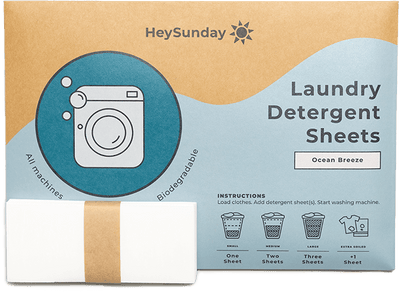
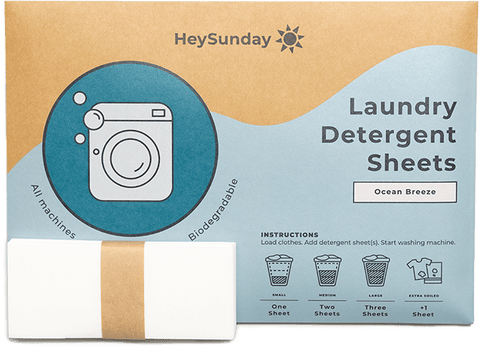
- Choose a detergent made to dissolve in cold water. Our laundry sheets do, and they arrive every 30, 60 or 90 days, so there's no store run for a jug. They go straight in the drum with nothing to measure.
Dry smarter
- Fold straight out of the dryer. Clothes left in the drum wrinkle and end up needing an iron.
- Air dry when you can. It takes longer on the line, but you don't have to be there for it, and the University of Michigan study puts full line drying at upwards of $2,100 saved over a dryer's lifetime. The ACI survey found 29% of Americans already air-dry on a line or rack. See air drying vs machine drying.
- If you're replacing a dryer, a heat pump model uses about 70% less energy than a conventional one and saves more than $500 over its life (ENERGY STAR).
- Run the dryer early in the morning or late in the evening. Off-peak drying costs less and, per the University of Michigan research, cuts its emissions by roughly 8%.
- Pick one or two laundry days a week so it doesn't spread across all seven.
Buy smarter
Look for ENERGY STAR. Certified washers use about 20% less energy and about 30% less water than standard models, and certified dryers about 20% less energy. If you're replacing a top-load agitator washer, a certified front-loader uses roughly half the energy and water.

A note on efficiency standards
New federal efficiency standards for residential clothes washers and dryers were finalized in February 2024, with compliance required from March 1, 2028. The Department of Energy projects about $2.2 billion in annual household savings.
In May 2025, DOE issued a proposed rule to rescind the amended water-use standard for residential clothes washers. As of September 2026 it is still a proposal and has not been finalized or withdrawn.
Frequently asked questions
How much time do Americans spend on laundry each year?
About 62 hours, which is roughly two and a half full days. The Bureau of Labor Statistics records it as 0.17 hours a day per person, averaged over every day of the year, weekends included.
How long does a load of laundry take?
About 1.5 to 2 hours for a full wash and dry. Sensor-dry and heavy soil settings stretch that. A higher spin speed shortens drying, since clothes come out of the washer with less water in them.
How often should you do laundry?
When the hamper fills, for most things, which is what most people do. A few things are worth timing, though: sheets every 7 to 10 days, bath towels after about three uses, and workout clothes after every wear.
How many loads of laundry per week for one person?
One to three loads a week, for most people living alone. Staying at the low end is easier with a week's worth of underwear and socks and a second set of sheets and towels. Then you can wait for a full drum instead of running half-empty loads.
How long does it take to fold a load of laundry?
A few minutes a load. Folding is part of laundry's hands-on time, the part that actually keeps you busy, separate from the hour or more the machine runs on its own. The Bureau of Labor Statistics measures total reported laundry time at about 10 minutes a day per person.
Reviewed by: Martin Wolf