
That Musty Smell on Your “Clean” Laundry Has a Chemical Name. It Starts Inside Your Washer.

Researchers have traced the wet-towel odor to residue the rinse leaves behind. Here’s why today’s washers are more prone to it, and the once-a-month habit washer makers recommend.
It usually shows up on a towel. You take it out of the dryer, it smells fine, and then you use it once and it smells like a wet basement.
Or it’s the gym shirt that comes out of the wash smelling almost exactly the way it went in. Or the sour whiff every time you open the washer door.
Most people do the obvious thing: more detergent, a scent booster, a second wash. It helps for a day. Then the smell is back.


That’s because the smell usually isn’t coming from your clothes. It’s coming from the machine that’s supposed to be cleaning them.
Scientists have identified exactly what you’re smelling
Laundry odor has been studied more than you’d think. The compounds behind it have names, and researchers agree on what they form from: residue left behind after washing, such as body oils, detergent and fabric softener.
The main compound behind the “wet, dirty dust-cloth” smell on laundry is 4-methyl-3-hexenoic acid, and it needs leftover soil from the wash to form.1
Sulfur compounds, dimethyl disulfide and dimethyl trisulfide, make up most of the “wet fabric” smell. The authors note the problem has grown as wash temperatures have come down.2
A study of household machines traced washer odor to one place in particular: the rubber door seal.8
In other words, if residue is building up somewhere inside your washer, it keeps feeding that smell. And every load you run picks a little of it up.

Why modern washers are more prone to it
This is partly a side effect of something good. Since 2004, federal efficiency standards have pushed washing machines to use less water and less energy, and they keep tightening; the next round applies to washers made from 2028.3 An ENERGY STAR washer uses about 30% less water than a standard one.4
At the same time, we’ve all moved to cold water. Heating the water is about 90% of the energy a washer uses,4 so cold washes save real money. Detergent maker data shows more than half of North American loads are now washed cold.5
Share of laundry loads washed cold
Percent of loads, North America
Source: Tide / Procter & Gamble data, reported by Sustainable Brands.5
Less water and cooler water both mean the same thing for your machine: oils and detergent don’t always dissolve and rinse away. One major washer maker lists “frequently washing with cold water only” as a common cause of washer odor.6 Another names the cause plainly: a “build-up of odor-causing residue” plus leftover moisture.9
The door seal is the usual suspect
Front-loaders seal tightly so they don’t leak. The trade-off is that the rubber gasket around the door holds water after every cycle, and residue collects in its folds where you never look.

“If not dried out, this water stagnates and begins to smell.” A major washer maker’s support guide, on water left in the door gasket7
Hard water makes it worse. Dissolved calcium and magnesium leave mineral scale when water is heated, and they make detergent work harder,11 so more of it gets left behind.
What most people try first


Scrubbing gets what you can see. An empty hot cycle with nothing in it mostly just rinses. The residue that matters is in the folds of the seal, under the drum, in the dispenser and in the hoses, and it needs something in the cycle that works on it.

That’s why washer makers tell you to run a dedicated cleaning cycle about once a month, not just a hot wash.7,9,10

What we put in the tablet, and why
We built HeySunday Washing Machine Cleaner around that cycle. One tablet goes in the empty drum. As the water heats, it works in layers.

All 9 ingredients and what each one does
| Ingredient | What it does |
|---|---|
| Sodium percarbonate | Releases oxygen in water to lift grime and odor |
| Sodium carbonate | Washing soda; helps loosen residue and powers the fizz |
| Citric acid | Loosens hard-water scale; part of the fizz |
| Protease | Enzyme that breaks down protein-based grime |
| C12-16 alkyl glucoside | Plant-derived surfactant that carries residue away |
| Sodium polyacrylate | Keeps loosened dirt suspended so it rinses out |
| Sodium silicate | Helps protect the machine’s metal parts |
| Sodium sulfate | Binder that holds the tablet together |
| Colorant | Marks the tablet layers |
No added fragrance. It’s meant to clear the smell, not cover it. Septic safe, and works in HE, front-load and top-load machines.
See HeySunday Washing Machine CleanerFree shipping · 30-day happiness guarantee
How to use it
Drop one tablet into the empty drum. No clothes, no measuring.
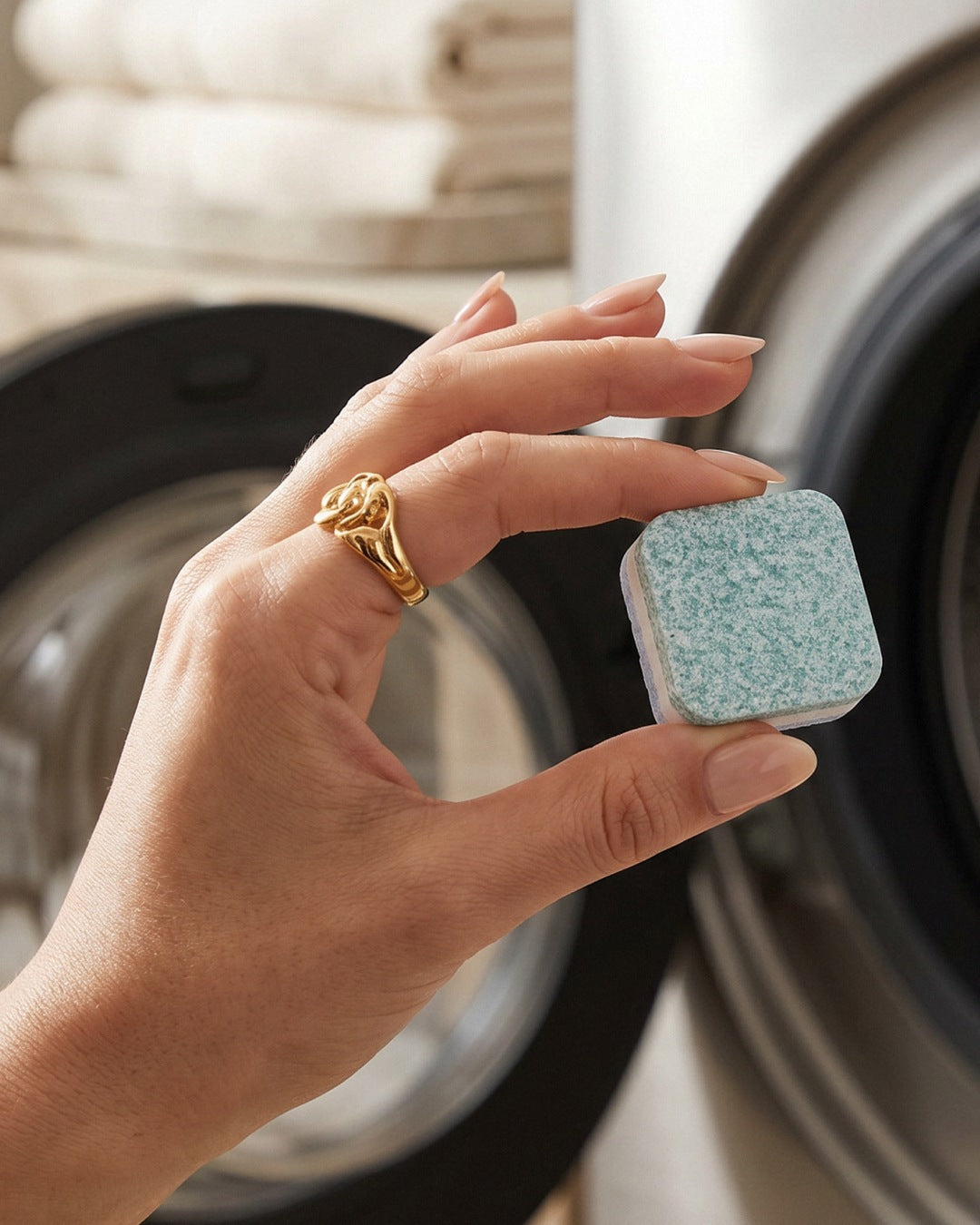
Run a hot cycle, or your washer’s cleaning cycle.
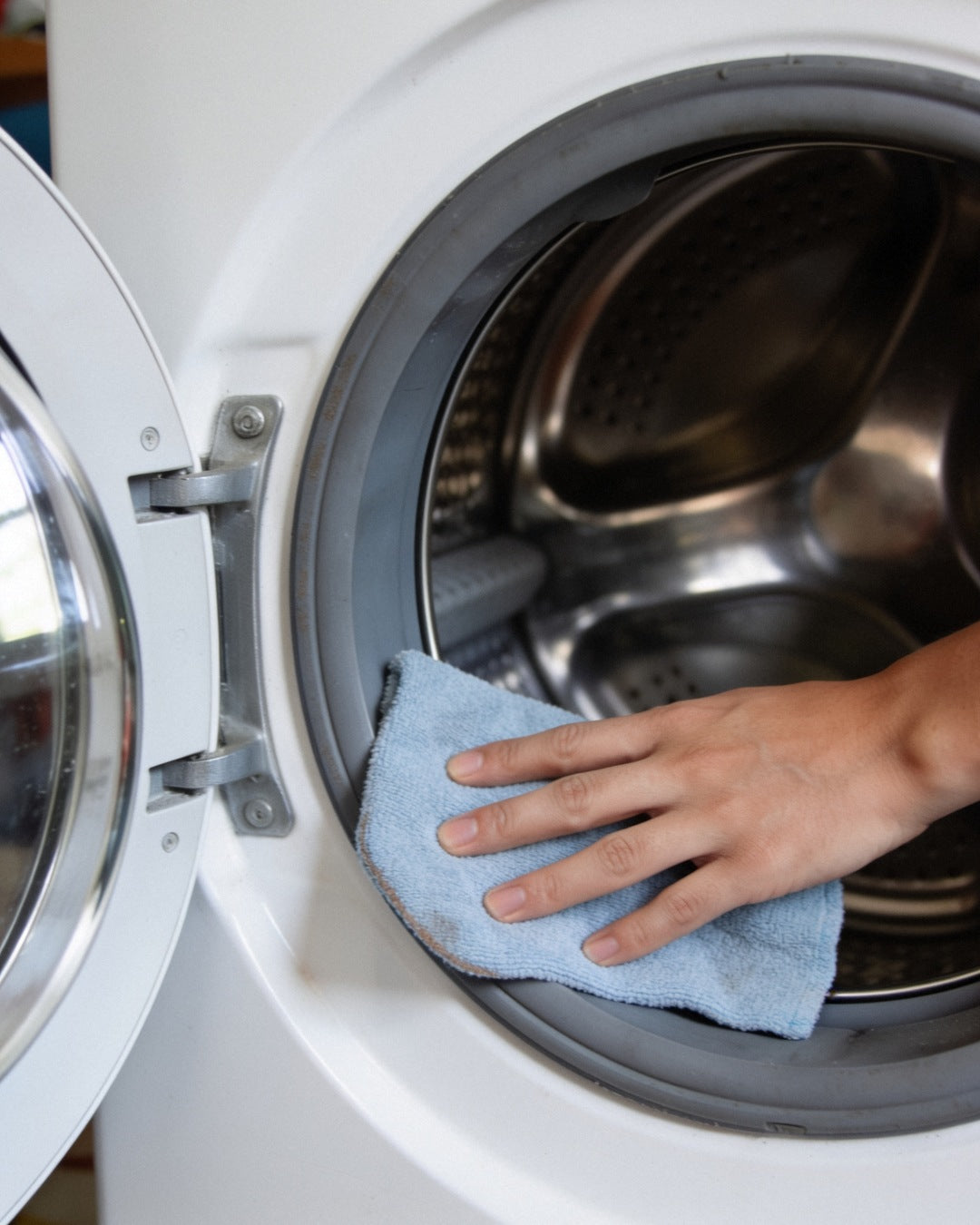
Wipe the seal. A quick pass with a cloth, then leave the door open to dry.
We suggest one tablet about twice a month, so a box of 24 lasts a year. Between cleans, the habits washer makers recommend help too: leave the door and the detergent drawer open, and take wet laundry out promptly.7,9
What regular cleaning does
The parts of the machine you can’t see from the door. Same machine, same angle, before and after.
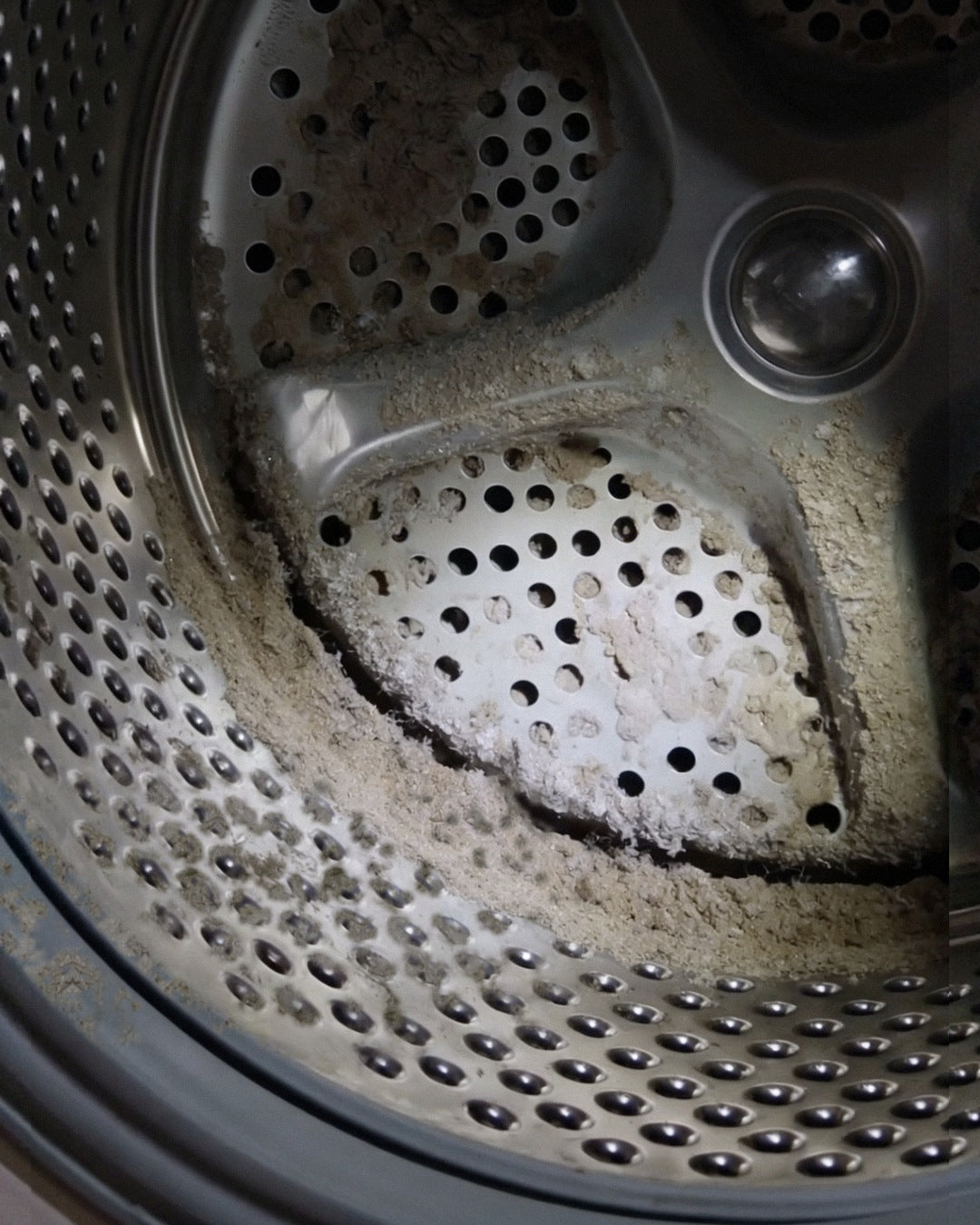
 BeforeAfter
Behind the drum
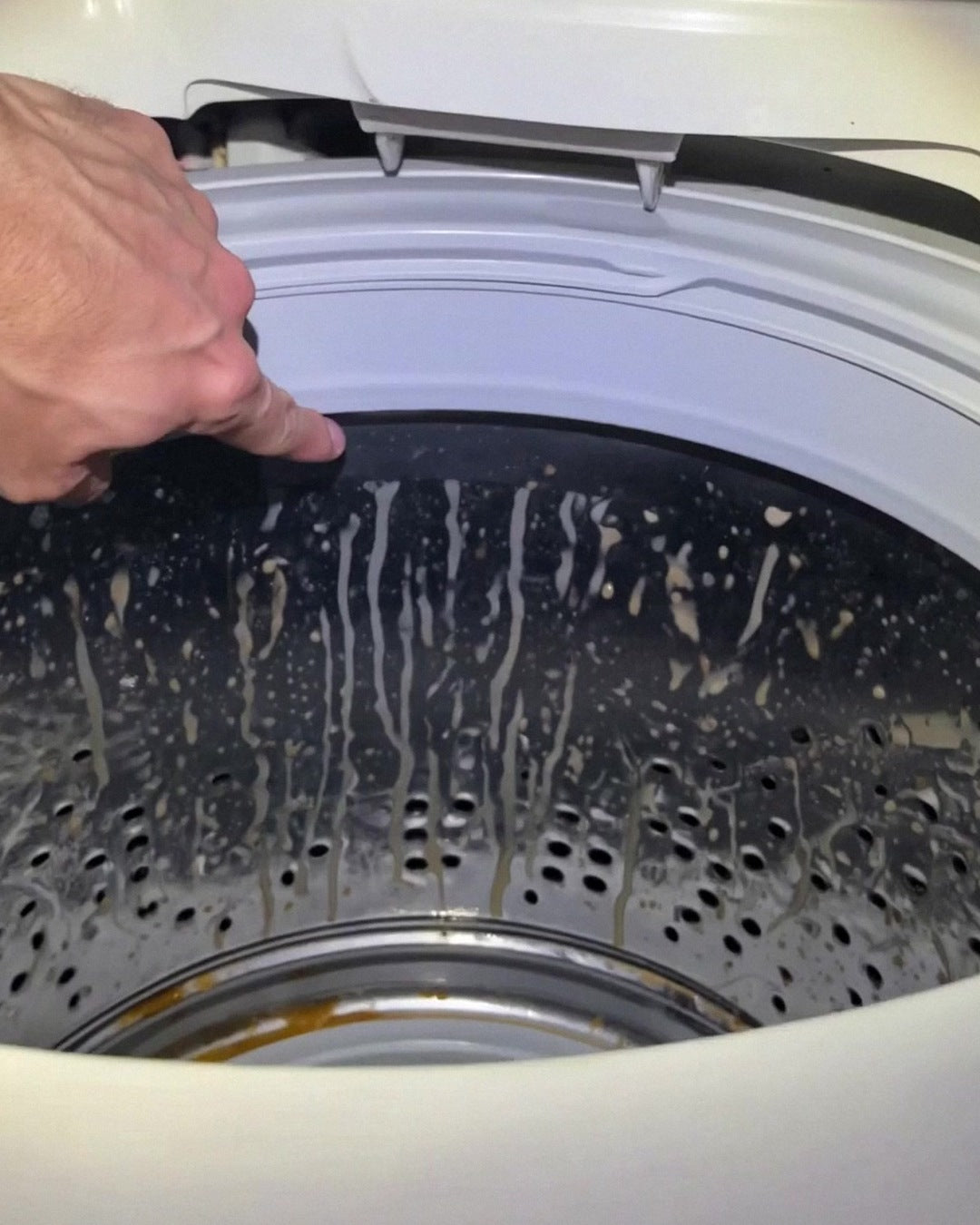
 BeforeAfter
Top-load tub
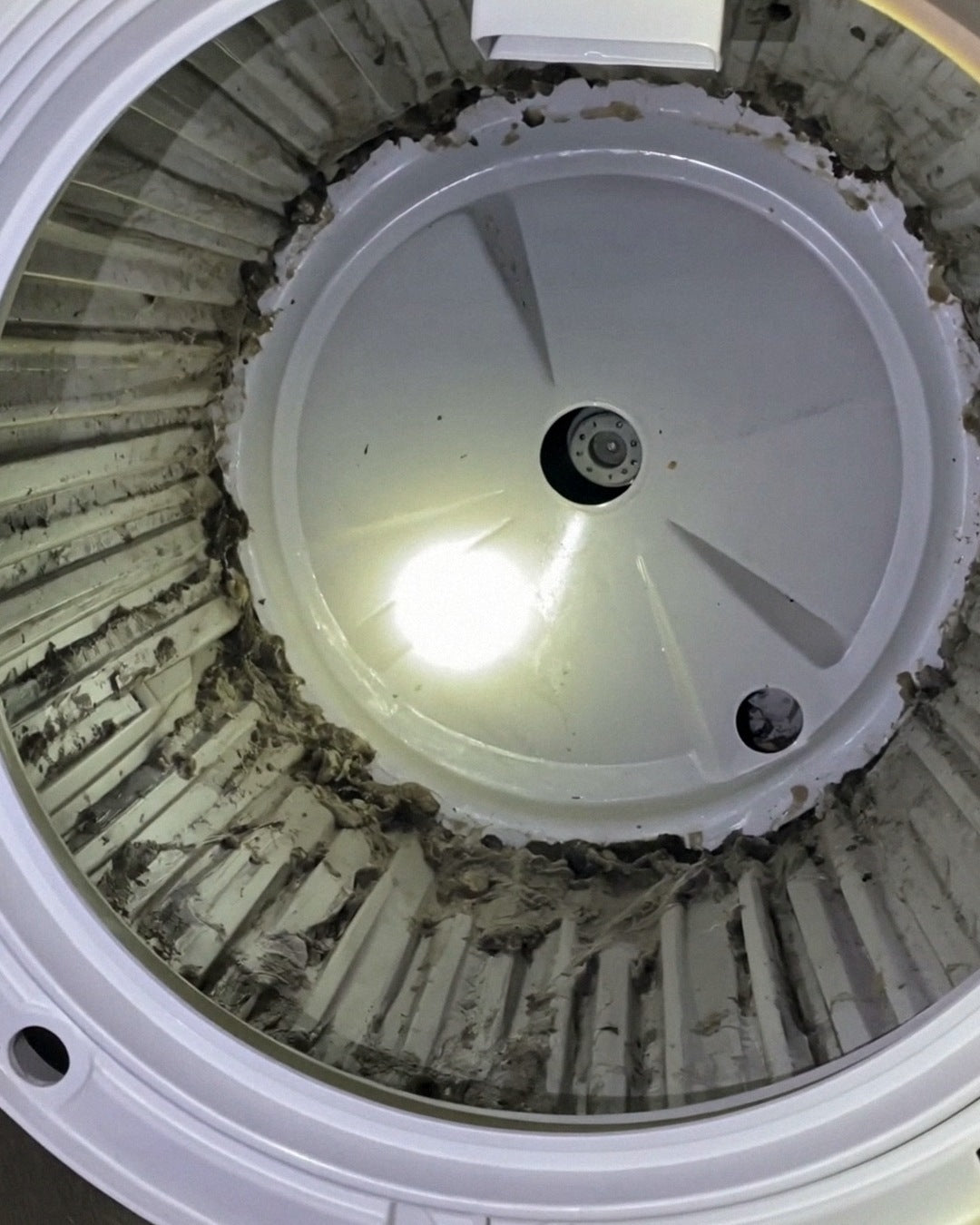
 BeforeAfter
Outer tub, drum removed
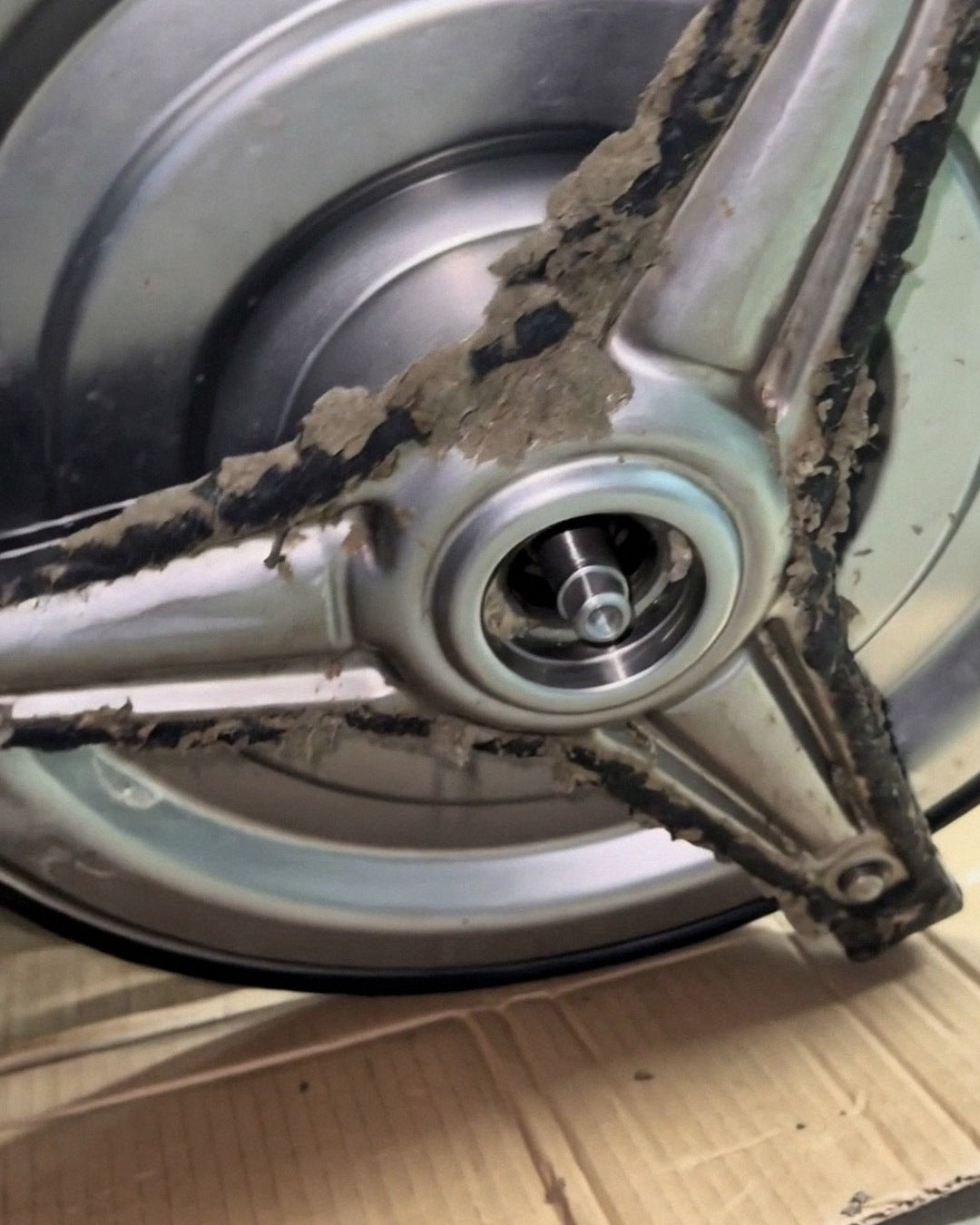
 BeforeAfter
Drum bracket
Illustrations of typical results after regular cleaning. Heavy buildup may take more than one tablet.
What customers say
“After just one treatment, there was a HUGE difference, and the smell was completely gone.”
“I used one tablet and was pleasantly surprised how clean and nice smelling it made my machine.”
“I’ve only used it once and I plan to keep it up.”
Save up to 30% on HeySunday Washing Machine Cleaner

- 30% off the Family Pack (72 tablets)
- Free shipping on every order
- 30-day happiness guarantee
- Ships from Hebron, KY
Common questions
Will it work in my washer?
Yes. It works in HE, front-load and top-load machines, and it’s septic safe.
How often should I use it?
About twice a month. Washer makers recommend a cleaning cycle at least monthly; we suggest twice for homes with hard water, pets or a lot of cold washes. A box of 24 lasts a year.
Does it leave a scent?
No. There’s no added fragrance. The goal is to clear the residue the smell comes from, not cover it up.
What if it doesn’t work for me?
Every order has a 30-day happiness guarantee.
If your laundry has been coming out smelling “off”, start with the machine. Try one tablet on your next hot cycle.
Sources
- Kubota H. et al. “Moraxella species are primarily responsible for generating malodor in laundry.” Applied and Environmental Microbiology 78(9), 2012. pmc.ncbi.nlm.nih.gov
- Zinn M.-K., Singer L., Bockmühl D. “Smells Like Teen Spirit: A Model to Generate Laundry-Associated Malodour In Vitro.” Microorganisms 9(5), 2021. pmc.ncbi.nlm.nih.gov
- U.S. Department of Energy. Energy Conservation Standards for Residential Clothes Washers, final rule, 66 FR 3314 (2001); compliance dates confirmed, 89 FR (Oct 21, 2024). govinfo.gov · govinfo.gov
- ENERGY STAR. Clothes Washers. energystar.gov
- Sustainable Brands. “Collaborations turning the Tide on cold-water washing” (Tide / P&G data, 2020–2023). sustainablebrands.com
- Samsung Support. How to keep your washer fresh and odor-free. samsung.com
- LG Support. Front Load Washing Machine – Odor (Gasket); Front Loader – How to Clean the Tub. lg.com · lg.com
- Hochschule Furtwangen University. Press release on washing-machine odor and the rubber door seal, Jan 15, 2020 (study: Jacksch et al., Microorganisms, 2020). idw-online.de
- Whirlpool Product Help. Removing Odors or Smells – Front Load Washer. producthelp.whirlpool.com
- GE Appliances. Top Load Washer – Cleaning the Tub. geappliances.com
- U.S. Geological Survey. Hardness of Water. usgs.gov
This article is published by HeySunday, the maker of Washing Machine Cleaner. Sources are cited for background on washer odor; none of them tested or endorse HeySunday products. Before/after images are illustrations. Reviews are from HeySunday customers; individual results vary.
