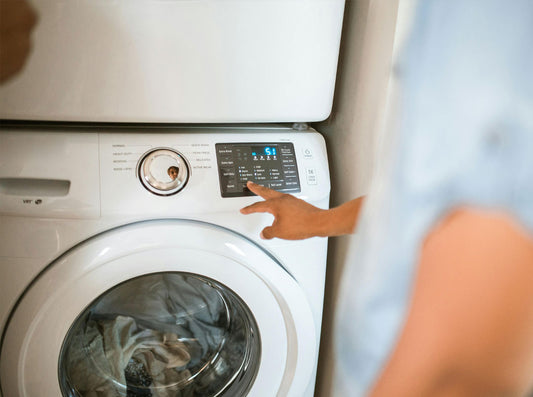
To get laundry done faster, sort as you go so loads are ready to wash, use the quick wash cycle for lightly worn clothes, and pick the highest spin the fabric allows so less water goes into the dryer. Dry heavy and light things separately, clean the lint screen every load, and fold straight out of the dryer.

Sort before laundry day
Whether it's a pile of school uniforms, your gym clothes from last week or a mountain of towels, sorting is slowest when it all happens at once on the floor. Do it as clothes come off instead.
- Use two or three hampers, for darks, lights and towels, and every load is ready before laundry day. Divided hampers cut sorting time in half by organizing laundry from the start. Our laundry sorting system guide shows a few ways to set them up for a whole family.
- Collapsible laundry baskets fold flat in a small space and are easy to carry from room to room.
- Keep lightly worn tees away from muddy socks. Muddy sports kit and work clothes need a longer cycle, and lightly worn clothes can go on a quick wash.
- Keep a stain stick or spray by the hamper and treat spots as clothes go in. Then you aren't hunting for marks on laundry day.
- Zip socks and baby clothes into mesh bags so they come out together instead of in odd places around the drum.
Pick the right wash cycle
Most of the time goes on the cycle itself. A quick wash typically runs 15 to 30 minutes, a normal cycle about 45 to 70 minutes, and a heavy-duty or bulky cycle can go well past an hour. Front-loaders usually take longer than top-loaders on the same setting.
| Load | Cycle | Typical time | Notes |
|---|---|---|---|
| Lightly worn everyday clothes | Quick wash, cold | 15 to 30 minutes | Keep the load small to medium. Quick cycles use less water and time. |
| Gym clothes and activewear | Quick wash or normal, cold | 30 to 60 minutes | Wash soon after wearing and a quick cycle is enough. |
| Towels and bedding | Normal or bulky, high spin | About 60 minutes or more | The high spin saves more time in the dryer than it costs in the washer. |
| Heavily soiled clothes | Normal or heavy duty | 60 to 90 minutes | A quick wash here usually means washing it twice. |
| Delicates | Delicate or hand wash | 30 to 50 minutes | Or wash them by hand in a sink while the machine runs. |
Stick to cold water unless a load really needs a hot soak. Cold washes are gentler on fabrics, help your clothes last longer and save energy. They don't make the cycle any longer either. Don't overload the drum. It feels quicker, but a packed washer cleans and rinses unevenly, and rewashing a load takes far longer than splitting it in two.
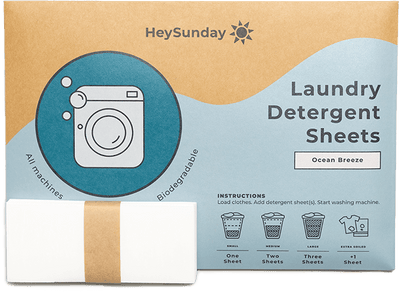
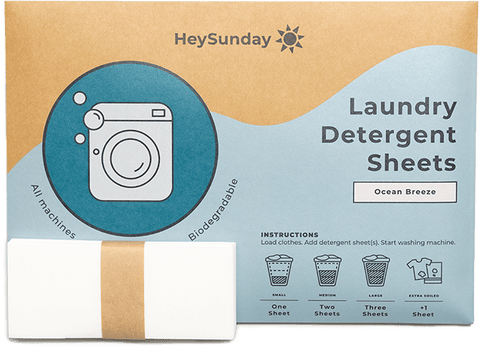
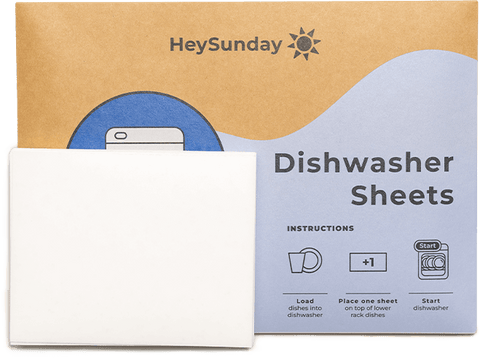
Measuring liquid is a fiddly part of every load, which is partly why we make HeySunday laundry detergent sheets. Put the clothes in, lay a sheet on top and start the machine, and you've used the right amount. The sheets are quick-dissolving even in cold water, so there's no waiting for detergent pods to dissolve. On a very short hand-wash cycle, tear the sheet into a few pieces and scatter them over the clothes so they dissolve in time.
Keep the sheets, a stain stick and your dryer balls in one small bin by the machine. Our guide to organizing a laundry room has more ideas for a small space.
Dry it faster

Drying is usually the slowest part, and the quickest fix starts in the washer. Every bit of water a high spin removes is water the dryer doesn't have to evaporate, and towels and jeans take a high spin well. Our guide to spin cycles has the right speed for each fabric.
Shake each item out as it goes into the dryer. Balled-up clothes trap damp in the middle. If you're in a rush, toss a clean, dry towel in with the wet load and it soaks up some of the moisture, which speeds up the whole cycle.
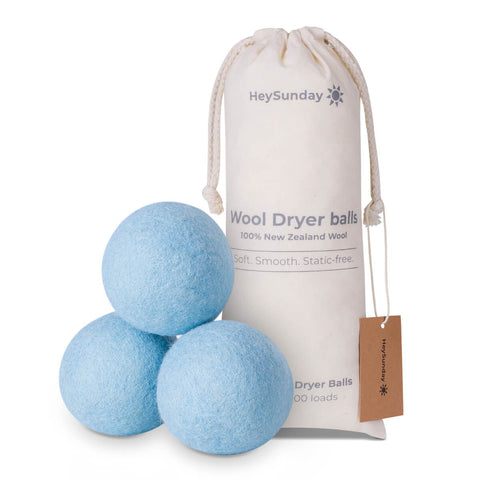
Dry towels and heavy cottons apart from light clothes. A mixed load runs as long as the slowest item, so your T-shirts sit in the heat waiting for the towels. Wool dryer balls tumble between clothes and keep them apart, which speeds up drying by up to 25%. Clean the lint screen every load too. A clogged screen cuts airflow and slows every load after it. Here's how to clean a dryer lint trap properly.
Bras, activewear and anything delicate dry quickly on a folding rack or tension rod and free up the dryer for bulky loads. See air dry vs machine dry for what goes where. On a sunny, breezy day, hang clothes on a line with space between them. It saves energy and can make fabrics last longer.
Fold and put away in one go

Fold as soon as the dryer stops. Warm clothes smooth out under your hands, things you take out straight away usually don't need ironing, and you're less likely to put it off.
- Fold straight into a basket for each person. Everyone takes their own and puts it away.
- Hang shirts straight from the dryer instead of folding them.
- The Marie Kondo "file fold" stores items upright, where they're easy to see and grab, and you stop pulling shirts from the bottom of the stack. Our guide to folding clothes shows how.
- Set up the linen closet and drawers ahead of time with dividers, shelf bins or labels. When folded things have a set place, putting them away is quicker.
- Fold while you watch TV or listen to a podcast. You're more likely to keep at it when it's not dull, and some people like to set a timer and see how fast they can fold a load.
A weekly routine that keeps it small
One load a day, started before breakfast and dried by the evening, takes a few minutes of hands-on time. If your week doesn't allow that, pick two fixed laundry days and run the washer and dryer back to back, with one load washing while the last one dries.
Set a timer on your phone when you start each cycle. Clothes left wet in the drum start to smell within hours (our post on how long clothes can sit in the washer explains why), and a forgotten load means washing it all again.
Frequently asked questions
Does a quick wash get clothes clean?
It does for lightly worn clothes, as long as the load is small. Many machines are only meant to take a few pounds of clothes on their shortest cycle, so check your manual before filling the drum. Anything sweaty, stained or muddy goes on a normal cycle.
Why does my quick wash take longer than the time on the display?
The washer adds time when it senses an unbalanced load or too many suds. It stops to redistribute the clothes or runs an extra rinse, and a load that is too big or has too much detergent can turn a 15-minute cycle into 30 minutes or more.
Does permanent press dry faster than normal?
No. Permanent press uses a medium heat and ends with a cool-down to stop creases, and it can take a little longer than a normal or heavy cycle. Use it for synthetics and shirts you don't want to iron, and normal heat for towels and cottons.
Why is my dryer taking so long?
Check the vent first, because a blocked vent is the usual cause. Lint builds up in the duct behind the machine even if you clean the screen every load, and a long or crushed vent hose slows airflow too. Clean the duct about once a year, and use the sensor dry setting so the cycle stops when clothes are dry.