Laundry detergent isn't toxic to wear or touch when you use it as directed, but it is poisonous if swallowed and can hurt your eyes, and pods are the biggest danger to young children. The ingredients worth checking are fragrance, dyes, optical brighteners, some preservatives and 1,4-dioxane, which can irritate skin or linger in water.
I do the never-ending queue of laundry in my house, and somewhere around the millionth cup of detergent I started wondering, "Is my laundry detergent safe?" It goes on the clothes, sheets and towels my family touches every day. I looked into what's actually in it, and below is what I learned and what we put in our own sheets.
When laundry detergent is dangerous

Wearing washed clothes is very low risk. The danger comes when detergent gets somewhere it shouldn't.
- Swallowed. Detergent is a strong soap, and swallowing it can cause vomiting. Concentrated liquid from a pod can cause breathing problems in small children.
- In the eyes. A splash of liquid or a burst pod can burn the eye, so rinse with clean running water for 15 minutes.
- Pods around toddlers. They're small, squishy and brightly colored, and toddlers mistake them for sweets. Keep them in a closed cupboard, up high.
- Mixed with other cleaners. Chlorine bleach with ammonia, or with acids like vinegar, releases toxic gas. Never mix them.
Keep every detergent in its original container and out of children's reach, sheets included. If someone swallows detergent or gets it in their eyes, call Poison Control on 1-800-222-1222 (US).
Breathing is the other worry. Strong scents and fumes from chemicals like bleach and synthetic fragrances can irritate the lungs, especially for people with asthma or allergies. One study found the effect of certain cleaning products on the lungs to be as damaging as smoking twenty cigarettes a day.
Ingredients people worry about
| Ingredient | Why it's used | The concern |
|---|---|---|
| Fragrance | Scent | The most common cause of skin reactions to detergent. Some fragrance mixes contain phthalates, which are being studied for effects on hormones. |
| Dyes | Color in the liquid or pod | Add nothing to cleaning and can irritate sensitive skin. |
| Optical brighteners | Make fabric look whiter | They trick the eye by reflecting light, and they're designed to stay on the fabric after the wash. Some people react to them with skin irritation and sensitivity to sunlight. |
| Preservatives | Stop liquids going off | Some, including formaldehyde releasers and methylisothiazolinone, are known contact allergens. Formaldehyde has been linked to skin irritation and, in larger doses, to more serious health issues. |
| Chlorine bleach | Whitening and stain removal | Irritates skin, eyes and lungs, and gives off toxic gas if mixed with other cleaners. |
| Phosphates | Softening hard water | Feed algae blooms in lakes and rivers. They're mostly gone from US laundry detergent. |
| 1,4-dioxane | Not added on purpose | A trace by-product of making some cleaning ingredients. The EPA classes it as likely to cause cancer, and New York has capped it at 1 part per million in household cleaning products since the end of 2023. |
Some chemicals in detergents are suspected of more serious long-term effects, such as hormone disruption or even cancer, and phthalates and formaldehyde in particular have been flagged for possible hormonal and carcinogenic effects. A University of Washington study found scented laundry products sending chemicals such as acetaldehyde and benzene out through dryer vents. The EPA classifies both as carcinogens and has set no safe exposure level for them.
Labels can make this hard to spot. Plenty of products say "eco-friendly", "natural" or "green". Take the time to study the label for ingredients like benzyl acetate, limonene, methyl ionone and the word "fragrance". Since 2020, California has required cleaning product makers to publish their ingredient lists online, so you can look up most big brands on their own websites before you buy.
What non-toxic laundry detergent is
Non-toxic laundry detergent skips the harsh chemicals in a lot of commercial products. The usual cleaning ingredients are plant-based enzymes, mineral salts, baking soda and essential oils. They aren't as abrasive, and they still keep your clothes clean.
People used to commercial detergent often worry a non-toxic one won't be strong enough. Many non-toxic products swap synthetic chemicals for cleaning enzymes and naturally occurring minerals, and with a broad mix of those, everyday clothes come out fresh and clean. Natural detergents also wash out without leaving a chemical residue behind, the kind you can't see but may still be wearing.
Other reasons people switch:
- Most are made of biodegradable ingredients that break down more readily.
- Many come in packaging that avoids the plastic waste of liquid detergent jugs and cuts the carbon footprint of your washing.
- They're less likely to set off skin irritation or allergic reactions, which means less need for extra lotions and medicines, and those come with their own environmental cost.
- Clothes can last longer. Traditional detergent compounds can weaken fibers over time and fabric breaks down sooner. Gentler, plant-based ingredients clean without stripping the natural oils and dyes out of the fabric.
Skin reactions and contact dermatitis
A reaction to detergent is a type of contact dermatitis. Harvard Health describes it as red, itchy, irritated skin, sometimes with small bumps or blisters. It can be mild or very itchy, and it's easy to mistake for another skin problem. A recent study shows the chemicals in many detergents can trigger skin conditions and lead to allergen sensitization early in life.
With detergent, the rash usually shows up where clothes touch you most: the waistband, arms and neck. It can also appear where clothes are tight and sweaty, like the armpits, groin and feet. People who stop using traditional detergents may have fewer skin problems, headaches or breathing issues.
If you think your detergent is the cause:
- Switch to a fragrance-free, dye-free detergent.
- Use the right dose. Too much detergent leaves more residue in the fabric.
- Run an extra rinse for bedding, towels and anything worn next to the skin.
- See a doctor if the rash doesn't settle, spreads or blisters. A patch test can find the exact ingredient.
There's more on spotting a reaction in our guide to laundry detergent allergies, and on choosing a gentler detergent in the best laundry detergent for sensitive skin.
Babies and kids
Babies have thinner skin than adults, and this is where fragrance-free detergent matters most. Your baby lies on your shirt, your sheets and your towels as well as their own clothes. Plenty of parents wash the whole family's laundry fragrance-free for the first year or so. Some families split it, with fragrance-free for the baby and their usual scent for everyone else.
When you're shopping for your little one's clothes, look for the words "hypoallergenic" and "fragrance-free". We make fragrance-free laundry detergent sheets from HeySunday for exactly this, and they're easy to use. Our guide to washing baby clothes covers the rest, from new clothes to blowouts.
Is Persil, Tide or Gain toxic?
No mainstream detergent is toxic to wear when you use it as directed, and there's no official ranking of the "most toxic" brand. The big brands are regulated, and they all carry the same warnings about swallowing and eyes. Many popular brands are effective cleaners, but they often rely on ingredients like synthetic fragrances and optical brighteners that some families would rather avoid. If that's you, these are worth a second look:
- Tide is known for its cleaning power, and it contains optical brighteners and artificial fragrances.
- Gain is popular for its strong scents, but those fragrances are often synthetic and can be irritants.
- Arm & Hammer is marketed as a more natural option because of its baking soda, but many of its formulas include artificial fragrances, which can be rough on sensitive skin.
- Persil is praised for its stain-fighting, and it also contains artificial fragrances.
- All Free Clear is sold as a "free and clear" option, but some formulas contain optical brighteners and preservatives that may be irritating.
Free and clear versions of the big brands leave out fragrance and dyes, and pods are the riskiest format in any brand in a home with small children. If you or your kids react to a detergent, compare the ingredient lists and pick a fragrance-free formula, whatever the brand.
Homemade laundry soap often leaves residue and can build up in the machine, which we explain in why homemade laundry soap is bad.
What's in HeySunday laundry sheets

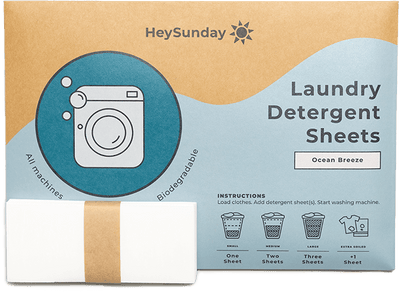
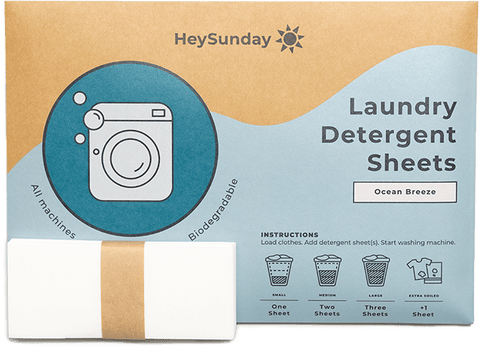
When you're choosing a non-toxic detergent, look for one that's been third-party tested and has plenty of customer reviews. HeySunday's laundry sheets are biodegradable.
We list every ingredient. This is the full list for Ocean Breeze:
Sodium Dodecyl Sulphate, Polyvinyl Alcohol, Starch (Corn), Deionized Water, Cocamidopropyl Betaine, Lauramidopropylamine Oxide, Sodium Fatty Acids, Glucoside Polyoxyethylene Ether, Natural Saponin, Sunflower Oil, Tea Oil, Protease, Citric Acid, Glycerin, Fragrance.
Fragrance Free is the same list without the fragrance, and it's the one I'd start with if anyone in your house has sensitive skin. Protease is an enzyme that breaks down protein stains like food, grass and sweat. The polyvinyl alcohol holds the sheet together and dissolves in the wash, and we cover it in detail in is PVA bad.
What's not in it: phosphates, phthalates, 1,4-dioxane, bleach, parabens or dyes. The formula is OECD 301B biodegradable.
On subscription a pack of 60 is $15 every 30 days, and your first order has a money-back guarantee. The sheets clean as well as your old detergent and work in HE, top-loading and front-loading machines, in hot or cold water. Shop HeySunday laundry sheets.
How to switch without throwing things out

You don't have to throw anything out. Use up what you have, and change one product each time something runs out.
- Start with detergent. It touches every load.
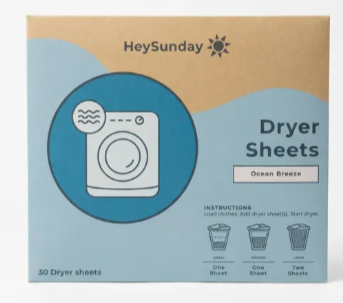
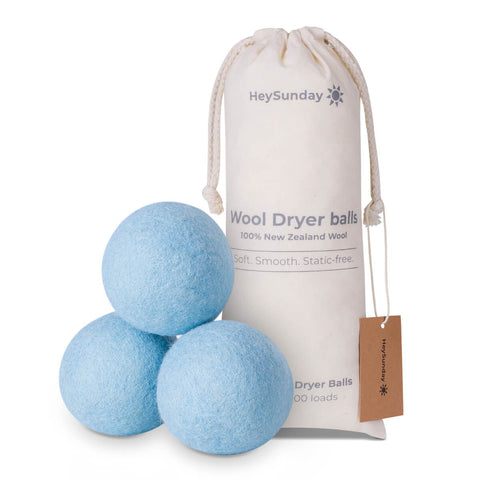
- Fabric softener next. Half a cup of white vinegar in the rinse softens without fragrance, and the smell is gone once the clothes are dry. Wool dryer balls cut static in the dryer, and we compare the options in dryer sheets vs dryer balls.
- Look for certifications. The EPA's Safer Choice label means the EPA has reviewed every ingredient. EcoCert means the ingredients are natural and environmentally friendly. Leaping Bunny or PETA means no animal testing. USDA Organic means natural ingredients sourced responsibly, with minimal to no harmful additives.
- Air dry when you can. It's gentler on fabric and skips the dryer sheet altogether.
There are more laundry guides on HeySunday's blog.
Frequently asked questions
What is the most toxic laundry detergent?
There's no official ranking, and mainstream brands are safe to wear when used as directed. The format that does the most harm is pods: US poison centers get thousands of calls a year about young children and laundry pods.
Is Persil laundry detergent toxic?
Not to wear, when you use it as directed, but like any detergent it's harmful if swallowed or splashed in the eyes. You can read Persil's full ingredient list on its own website, which California law has required since 2020.
Does Persil have cancer-causing ingredients?
There's no good evidence that washing clothes with Persil, or any mainstream detergent used as directed, causes cancer. The worry online is 1,4-dioxane, and New York has capped it at 1 part per million in household cleaning products since the end of 2023.
Is All Free Clear toxic?
All Free Clear isn't toxic when used as directed, and it carries the National Eczema Association's Seal of Acceptance. If you still react to it, compare its ingredient list with another fragrance-free detergent and look for the difference.
Can laundry detergent cause a rash?
Laundry detergent can cause a rash. An allergic one often turns up a day or two after contact, not straight away, which makes it easy to miss that a new detergent, or a change to a familiar brand's formula, is the cause.
Is natural detergent as effective as regular detergent?
They can be just as effective, especially ones that use enzymes to break down stains.
Can non-toxic laundry detergents remove tough stains?
Ones with plant-based enzymes can. Enzymes break down specific types of stain, like protein-based or oily ones, without needing harsh chemicals, so non-toxic laundry detergents can be effective on tough stains.
How can I make my laundry smell good without using scented detergents?
Put a few drops of an essential oil, like lavender or eucalyptus, on wool dryer balls or a damp washcloth before they go in the dryer. That gives laundry a light, fresh scent without synthetic fragrance.