A complete college packing list covers seven areas: bedding for a Twin XL bed, about two weeks of clothes, laundry and cleaning supplies, toiletries in a shower caddy, academic supplies, tech with a surge protector, and your important documents. Check your school's housing page before you buy anything, because most dorms already provide the bed, desk and dresser.
Congratulations on getting in. It sounds like a cliche, but ask anyone who went, whether they graduated a few years or a few decades ago, and most of them look back on college fondly.
Download the free printable PDF checklist
What college move-in costs in 2026

Move-in costs more than most families plan for, and the number is climbing. According to the National Retail Federation's 2026 Back-to-School survey, college students and their families expect to spend a record $103.5 billion this year. It's the first time back-to-college spending has crossed $100 billion, up from $88.8 billion in 2025.
Per household, that averages $1,437.79. The biggest line items are $341.95 on electronics, $194.00 on dorm and apartment furnishings, $182.39 on clothing and $133.34 on personal care.
A lot of that can be avoided. The two most common ways to waste money on this list are buying something your dorm already provides and buying something your dorm won't let through the door. Check both before you shop.

What a dorm room comes with
Most dorm rooms come furnished with a bed frame and mattress, a desk and chair, a dresser or built-in storage, window blinds, and trash and recycling bins. Some schools also provide a combined microwave and fridge unit. Many ban air conditioners, candles and open-element appliances outright, and the rules get enforced at move-in.

Three real examples of how much the rules differ:
- The University of Minnesota caps residence hall microwaves at 700 watts and mini-fridges at 4.3 cubic feet.
- Columbia Housing bans extension cords, hot-pot coffee makers, hoverboards and e-bikes, but allows pod-style coffee makers.
- UT Austin furnishes every room with a combined MicroFridge, so buying your own is money wasted.
Two things to do this week: find your hall's page on your school's housing site, and text your roommate about who's bringing the big stuff (TV, rug, fridge, printer).
Dorm bed size and bedding

Most college dorm beds are Twin XL, 38 inches by 80 inches, which is five inches longer than the standard twin you probably slept on at home. A standard twin fitted sheet won't stay on a Twin XL mattress and pops off the corners every night until you get the right ones.
A few older residence halls still use standard twin frames, and some schools use odd sizes, so confirm with your housing office before you buy bedding. Dorm mattresses also tend to be thin, typically 5 to 6 inches and built to last, not for comfort. A mattress topper is one of the best buys on this list. Get two sets of Twin XL sheets too, since one set is always in the wash.
Dorm room essentials

Buy the bedding before move-in, and hold off on anything that depends on the room's dimensions until you've seen it.
- Twin XL sheets (two sets)
- Pillows and pillowcases
- Comforter or duvet, plus one extra blanket
- Mattress topper
- Waterproof mattress protector
- Over-door organizer for shoes and accessories
- Clothes hangers, more than you think you need
- Under-bed storage bins (measure your clearance first, as lofting the bed changes it completely)
- Desk lamp or clip lamp
- Fan, if your hall isn't air conditioned and you can't bring a unit
- Dry-erase board or bulletin board
- Small nightstand or bookshelf, if one isn't provided
- Removable adhesive strips and poster putty
- Full-length or over-door mirror
Clothes and personal items
You'll have less closet space than you do at home, usually a lot less. Pack about two weeks of everyday outfits and swap with the seasons if you'll be home over breaks. Winter coats can come back with you after Thanksgiving.
- Shirts, jeans, shorts, dresses and skirts, about two weeks' worth
- Socks and underwear
- Sweaters, hoodies and sweatshirts
- Comfortable everyday shoes and sneakers
- Pajamas and loungewear
- Athletic clothes
- Coat, jacket, raincoat and umbrella
- One business-casual outfit with shoes for career fairs and presentations, which come round faster than you'd think
- One semi-formal outfit with shoes
- Swimsuit
- Bathrobe, if you'd rather not walk back from a communal shower in a towel
- Belts, scarves and hats (leave anything valuable at home)
Laundry and cleaning supplies

For a lot of students this is the first time laundry is entirely their problem. Two things shape what you should pack: the machines are shared, and there's almost no storage.
Shared machines and no storage make a jug of liquid detergent a poor fit for dorm life. It's heavy to carry down three flights, it takes shelf space you don't have, it can leak in a laundry basket, and a spill in a shared laundry room ruins an afternoon.
Marcos De Andrade, laundry expert and founder and owner of Green Planet Cleaning Services, recommends sustainable alternatives like laundry detergent sheets, and says they're excellent for tiny dorm spaces:
"They're pre-measured, so students avoid the most common laundry mistake I see, over-pouring, they're lightweight, and there's no bulky plastic jug to store or spill. Pair them with wool dryer balls and cold-water washing, and a student meaningfully cuts both cost and environmental impact."
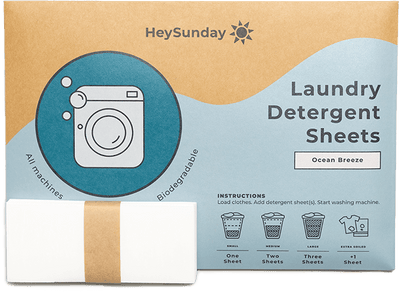
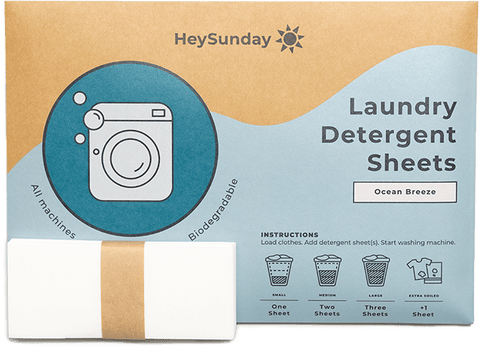
We make HeySunday laundry detergent sheets, and a pack of 60 comes flat enough to slide into a desk drawer next to your chargers. They go in whatever your campus laundry room has, HE front-loaders included.

Pack this
- Laundry detergent sheets (no jug, nothing to spill)
- Laundry hamper, bag or backpack-style bag (you'll be carrying it down a hallway)
- Mesh bags for delicates and socks
- Collapsible drying rack
- Lint roller
- Stain remover pen
- Quarters or your campus laundry card (check whether your school has moved to an app)
- Disinfecting wipes
- Microfiber cloths
- Handheld vacuum
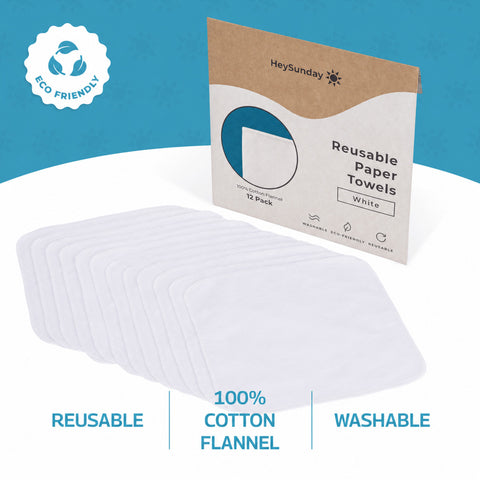
- Reusable paper towels for everyday spills, which you wash and use again
Gillian Economou, a professional organizer at Sort It Out, gave us her own list:
"Every college student should pack laundry detergent, dryer sheets, stain remover, mesh laundry bags for delicate items, and two laundry baskets or hampers. I recommend one hamper that stays in your dorm room and a lightweight basket that's easy to carry to and from the laundry room. It's also helpful to have disinfecting wipes or paper towels for wiping down machines in dorms before using them.
Laundry detergent sheets can be a great option for college students because they're lightweight, take up very little space, and are easier to store than bulky detergent bottles. For students living in small dorm rooms, they're great because they take up much less space than a bulky detergent bottle."
How to do laundry in a college dorm
Wash about once a week, sort into darks and lights, and use cold water for most things. Cold water is kinder to colors, helps prevent shrinking and is less likely to set stains than hot. Put your clothes in the drum, lay the detergent sheets on top and run the cycle the care labels call for. If you're using liquid or powder in a top-loader, start the water before you add clothes. Our guide to college laundry hacks has more on doing it on a budget.
Go when the laundry room is quiet. Sunday evening is the busiest time on most campuses and Tuesday morning is the best.
Set a timer on your phone. Leaving a finished load sitting in a shared machine is the quickest way to annoy a whole floor. Our post on how long clothes can sit in the washer explains why wet clothes start to smell.
Treat stains before they dry. A couple of minutes under cold water in the bathroom sink does more than any wash cycle will, and hot water can set wine, coffee and grass stains. Blot it and don't rub, as rubbing pushes the stain deeper into the weave.
Toiletries and personal care
In a communal bathroom everything travels with you, twice a day, in one hand. You need a caddy and shower shoes. Dorm bathrooms have almost no storage, so pack what fits in the caddy and a small bag.
- Shower caddy, plastic or mesh, with drainage
- Shower shoes or flip-flops
- Soap or body wash, shampoo and conditioner
- Toothbrush, toothpaste, floss and mouthwash
- Deodorant
- Hairbrush or comb, and a hair dryer if it's allowed
- Shaving supplies
- Sunscreen
- Bath towels and washcloths, at least two towels
- Nail clippers and tweezers
- First-aid basics: bandages, antibiotic ointment and a thermometer
- Over-the-counter pain relievers
- Glasses, contacts and contact solution
- Makeup, lotion and moisturizer
- Menstrual products
- Prescription medications, plus a copy of each prescription
Academic supplies
Buy light here. The campus bookstore is right there, and you'll find out what you need in the second week of classes. Notebooks and pens are the cheapest things on this list to replace and the easiest to over-buy.
- Backpack that fits a laptop
- Notebooks and binders
- Lined paper and printer paper
- Pens, pencils, highlighters and permanent markers
- Sticky notes, paper clips and rubber bands
- Planner or wall calendar
- Textbooks (check rentals, digital editions and the campus library before buying anything new)
Tech and gadgets
Electronics are the largest single college spending category in 2026, at an average of $341.95 per household, and most of that is a laptop. Check your school's electrical rules before you buy accessories. Plain extension cords are banned in a lot of residence halls.
- Laptop and charger
- Phone and charger
- Tablet and charger, if you use one
- Surge protector with a built-in circuit breaker
- Headphones or earbuds, plus a cheap wired pair as a backup for exams
- Portable speaker
- Graphing calculator
- Portable battery pack
- Printer (optional, library printing is cheap)
Kitchen supplies

What you need here depends on your dorm. Some halls have a shared kitchen, some give you a MicroFridge and some give you nothing. Agree with your roommate before anyone buys an appliance, and check the wattage and size limits first.
- Mini-fridge and microwave, if they're allowed and not provided
- Pod-style coffee maker, if it's allowed
- Microwave-safe plates, bowls and mugs
- Utensils
- Dish soap and a sponge
- Dish towels
- Reusable water bottle and travel mug
- Food storage containers
- Non-perishables: instant noodles, oatmeal, cereal, granola bars, popcorn, tea and coffee
Important documents
Keep these together in one folder, and bring copies, not originals, wherever you can. Your student ID usually doubles as your building key, meal plan and laundry card, so it's the one thing worth putting on a lanyard.
- Driver's license, passport or state ID
- University ID card
- Debit and credit cards, and bank account details
- Health insurance card and information
- Emergency contact list
- Copies of your birth certificate and Social Security card
- Car insurance and registration, if you're bringing a car
- Renter's or student property insurance documents, if you have a policy
What not to bring to college
These are the most common overpacking mistakes, roughly in order of how much money they waste:
- Every piece of clothing you own, when two weeks' worth is plenty.
- A second TV, rug, fridge or printer. Text your roommate first.
- Air fryers, toasters, hot plates and space heaters, which get confiscated at move-in at most schools.
- A full-size detergent jug, with no shelf to put it on and three flights to carry it down every week.
- Nails, tacks or anything else that damages walls. Wall damage comes out of your deposit, so use removable strips.
- Valuables. Dorms are shared spaces, with heavy foot traffic on move-in weekend.
- Rugs, storage bins and anything else bought before you've seen the room.
How the HeySunday donation program works
Clean laundry is one of the quieter barriers families face. Detergent is one of the first things to fall off a grocery list, and it isn't covered by SNAP. So donations are built into how HeySunday works:
- Every new order sends laundry loads to a named shelter or food bank near you. The first five loads are on us, and you can add more at checkout.
- During our matching drives, every pack you order sends a second pack to a partner, free of charge.
- If a pack isn't right for you, donate it. Email us and we'll send a prepaid label that routes it to a partner near you instead of a landfill.
- If sheets are piling up, send your surplus: your next subscription shipment can go straight to a partner. Your subscription stays active and nobody's cabinet overflows.
More than 300 named partners across 49 states have received loads, more than 100,000 loads have been donated, and every county in the country is mapped to a real, named organization, one with an address and someone who signs for the boxes, not a general fund. If you know a shelter, food bank or family resource center near your campus that could use laundry supplies, find your nearest partner or tell us about them, and we'll handle the outreach from there.
Frequently asked questions
What size bed is in a college dorm?
38 by 80 inches, which is Twin XL, in most college dorms. If you add a mattress topper, buy deep-pocket fitted sheets so they still reach round the corners. Twin XL bedding also fits each half of a split king bed, and the sheets stay useful after college.
What is provided in a college dorm room?
Most dorms provide just the furniture. Bedding, towels, lamps and rugs are almost never provided. Many schools also rent loft kits, bed risers or microwave and fridge units through an approved vendor, which can be cheaper than buying them for one year.
What do most people forget to pack for college?
A basic toolkit with a screwdriver is the one most students forget, along with an HDMI cable, a power strip long enough to reach a lofted bed, removable hooks and a reusable water bottle. Pack them in one box marked for the first night, with a phone charger and shower shoes.
How much clothing should I bring to college?
Bring about two weeks of everyday outfits, plus one business-casual and one semi-formal outfit. Pack them in a suitcase that fits under your bed. It doubles as storage for out-of-season clothes and is ready for trips home.
What laundry detergent is best for a college dorm?
Laundry sheets suit a dorm best. A pack of 60 HeySunday laundry sheets fits in a desk drawer, they're compact and spill-proof, and they work in the high-efficiency machines most campus laundry rooms use. For the dose, use 1 sheet for a small load, 2 for a medium load and 3 for a large load, plus 1 extra if the load is heavily soiled.
How often should college students do laundry?
About once a week for most college students. Wait longer and you usually run out of underwear before you run out of anything else. Sheets need washing every one to two weeks, and towels after three or four uses, because they stay damp in a dorm room.
Do you need renter's insurance for a dorm?
No, it isn't usually required. Many families are already covered under a homeowner's or renter's policy that extends to a student living on campus, so call your insurer before buying a separate student property policy.
How do you ship things to your dorm?
Time deliveries to arrive the week you move in, not earlier. Most schools have a campus mail center that accepts packages before or during move-in week, but many won't hold them past a certain window or accept them before a specific date, so check your school's mail policy first.
When should you start shopping for college?
In early summer. By early July in 2026, 62% of back-to-school shoppers had already started, according to the National Retail Federation. Check whether your state has a sales tax holiday too. More than a dozen states run tax-free shopping weekends in late July or August, usually covering clothes, school supplies and sometimes computers.