The best laundry detergent for sensitive skin is fragrance-free and dye-free, with a short ingredient list, and used at the right dose so it rinses out of your clothes. Fragrance is the most common trigger. Too much detergent is the next one, because whatever doesn't rinse out sits against your skin all day.
If anyone in your house has sensitive skin, one wrong bottle of detergent is enough to leave them itchy and uncomfortable. It helps to know which products get clothes clean and leave skin alone, and which don't.
What to look for in a detergent for sensitive skin

Look for fragrance-free on the label, not "unscented". Fragrance-free means no scent was added. Some "unscented" products still contain fragrance to mask the smell of the other ingredients. Colorants do nothing for cleaning, so skip synthetic dyes, along with optical brighteners, chlorine and phosphates.
A short ingredient list you can actually read helps. Fewer additives means fewer chances for a reaction, and a full list on the pack lets you check for anything you already know you react to. The best detergents for sensitive skin use biodegradable technology and plant-derived ingredients, with no harsh chemicals. A low-sudsing formula rinses out more easily, which matters most in HE washers that use less water. A pre-measured dose or a clear measuring line stops you pouring in more than the load needs.
Treat "hypoallergenic" with care. It isn't a regulated term in the US, and a brand can use it to mean whatever it wants. Read the ingredient list instead. The National Eczema Association keeps an Ecz-clusion list of ingredients known to irritate eczema-prone skin, such as bacitracin, benzocaine and 30 others that are known irritants and allergens.
More people now look for transparent ingredient lists and pick products labeled "fragrance-free," "dye-free," and "hypoallergenic." Brands have answered with cleaner formulas, and groups like the National Eczema Association help steer families toward safer choices. Picking the right detergent is the first step. Our longer guide to hypoallergenic laundry detergent goes further.
Ingredients that commonly irritate skin
Plenty of household products are loaded with chemicals that can aggravate eczema-prone skin, usually synthetic fragrances, dyes and preservatives, all known irritants for people with sensitive skin. You use these products every week and they touch your clothes, towels and bedding directly, which is why their effects can last.
- Fragrance. One word on the label can cover a mix of many unlisted chemicals.
- Dyes. They color the detergent and can irritate skin.
- Optical brighteners, which are made to stay on fabric so whites look brighter. That means they stay against your skin too.
- Harsh surfactants. Some clean well but strip skin of its natural oils.
- Formaldehyde-releasing preservatives like DMDM hydantoin, which slowly release formaldehyde to extend shelf life and are linked to skin irritation.
- Scented boosters, fabric softeners and dryer sheets. They're easy to forget because they aren't the detergent, but they leave fragrance on every item in the load.
If you've switched detergents and still react, the softener and dryer sheets are the next thing to check.
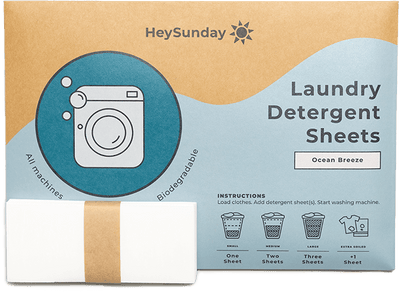
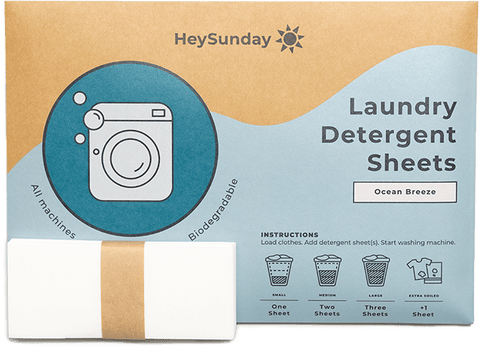
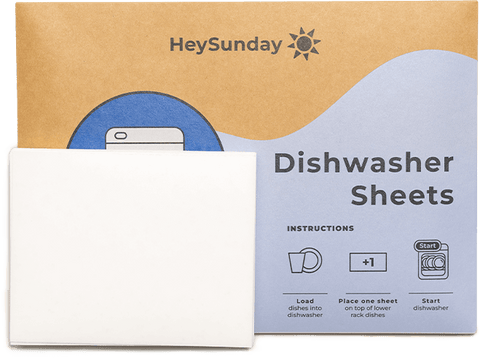
HeySunday Fragrance Free Laundry Sheets
Can laundry detergent cause eczema or a rash?
Laundry detergent doesn't cause eczema. It can trigger a flare-up in someone who already has it, and in people who don't, it can cause a rash called contact dermatitis. Contact dermatitis (skin irritation set off by something outside the body) affects up to 20% of people at some point in their lives, and laundry products are a common trigger.
Allergies of all kinds are common. The Centers for Disease Control and Prevention's National Center for Health Statistics reports that nearly 1 in 3 adults and over 1 in 4 children have been diagnosed with a seasonal allergy, eczema, or food allergy. Some groups are hit harder. Black and non-Hispanic children, for example, are more likely to have both food allergies and higher rates of eczema.
The National Eczema Association estimates eczema affects up to 10% of adults and up to 20% of children. That's about 16.5 million adults in the US, with about 6.6 million of them having moderate to severe symptoms. Nobody fully understands the cause, but it's strongly linked to a weakened skin barrier and an overactive immune response. The skin ends up more open to irritation and infection and quicker to react to things around it. Pollen, pet dander, stress and sweat can all set off a flare-up. Clothes, sheets and towels sit on your skin for hours, so whatever the detergent leaves behind gets plenty of contact time.
The CDC says rates of eczema and other allergic conditions have stayed high and may be rising in some populations.
A reaction to laundry detergent usually looks like a red, itchy rash where fabric sits closest: the waistband, armpits, neck and inner thighs, or across the face and chest after a night on freshly washed pillowcases. If a rash spreads, blisters or won't settle after you change detergent, see a doctor or dermatologist. A patch test can pin down the exact ingredient.
Liquid, powder, pods or sheets
| Type | Dosing | What to watch for |
|---|---|---|
| Liquid | You pour and measure each time | Easy to over-pour, especially with a big cap. Free and clear versions are widely sold. |
| Powder | You scoop and measure each time | Can leave a gritty residue in cold or quick cycles if it doesn't fully dissolve. |
| Pods | One fixed dose per pod | You can't use less for a small load, so small loads get more detergent than they need. |
| Sheets | Pre-measured, 1 to 3 sheets by load size, plus 1 extra for a heavily soiled load | Pick a fragrance-free version and match the number of sheets to the load. |
Traditional liquid detergents often contain preservatives and stabilizers that can irritate skin. Powder is the old-school option. It can be cheap, but it often contains fillers, it's messy, and it clumps if you don't store it well. For people with eczema, liquid detergents and fragrance-free plant-based laundry sheets are generally better options, since they tend to leave less residue than powders. Even tiny amounts of that buildup can stick to clothes and trigger irritation once it touches your skin.
Low residue is the main reason people with sensitive skin like sheets. There's nothing to pour, each sheet is the same strength every time, and they often have fewer ingredients than liquids. They come in a fragrance-free version.
The laundry aisle has dozens of bottles and boxes. Some say "free & clear," others promise "whiter whites," and a handful call themselves eco-friendly. This is how traditional, sensitive-skin and eco-friendly detergents compare if you have sensitive skin:
| Feature | Traditional detergents | Sensitive-skin formulas | Eco-friendly alternatives |
|---|---|---|---|
| Fragrance-free | Rare, most are heavily scented | Commonly "Free & Clear" | Often fragrance-free or lightly scented with natural oils |
| Dye-free | Sometimes, but not consistent | Yes, almost always | Yes, designed without dyes |
| Hypoallergenic | Not guaranteed | Marketed as hypoallergenic | Many are dermatologist-tested or labeled eczema-safe |
| Packaging | Bulky plastic jugs or pods | Usually still in plastic jugs | Plastic-free packaging, lightweight |
| Convenience | Heavy, messy liquids or pods | Easier to find, but still bulky | Compact, pre-measured, no mess |
| Skin safety | Higher chance of irritation | Lower chance, but varies by brand | Designed to minimize irritation with plant-based, gentle ingredients |
Formulas sold as "sensitive-skin" are a real step up from conventional detergents. Most still come in bulky plastic jugs, though, and their ingredients aren't always consistent. Eco-friendly detergent sheets are gentle on skin and on the planet.
Our Fragrance Free laundry detergent sheets

Our Fragrance Free laundry detergent sheets start from the Ocean Breeze formula and leave the fragrance out. We made them for homes where scent is the problem. This is every ingredient in them: Sodium Dodecyl Sulphate, Polyvinyl Alcohol, Starch (Corn), Deionized Water, Cocamidopropyl Betanine, Lauramidopropylamine Oxide, Sodium Fatty Acids, Glucoside Polyoxyethylene Ether, Natural Saponin, Sunflower Oil, Tea Oil, Protease, Citric Acid, Glycerin.
There are no artificial fragrances, dyes, phosphates or optical brighteners in them to irritate skin. They're also free from phthalates, bleaches, parabens and 1,4-dioxane. That last one is a chemical byproduct in some cleaning and personal care products, and the Environmental Protection Agency is working to limit it. The EPA says it poses an unreasonable risk to human health and is updating its risk evaluations and tightening safety standards to cut exposure.
Each sheet dissolves completely in the water, leaving no residue on your clothes to irritate skin. They're also OECD 301B biodegradable. Customers rate our laundry sheets 4.7 stars from 5,800+ ratings. A pack of 60 costs $15 on a 30-day subscription, and your first order comes with a money-back guarantee.
Shop HeySunday Fragrance Free laundry sheets for the whole family
Wash habits that help sensitive skin
- Match the dose to the load every time. More detergent doesn't make clothes cleaner. It just leaves more in the fabric.
- Use the extra rinse button for bedding, towels and underwear, the things that touch your skin longest.
- Wash in cool or warm water. Hot water can set detergent residue into fabric.
- Leave room in the drum so the water can rinse the clothes properly.
- Wash new clothes before you wear them. They can carry finishing chemicals and dust from the factory and shipping.
- Wash sensitive skin clothing separately to cut down on cross-contamination, and use the same fragrance-free detergent for the whole household. Then nothing picks up fragrance from a shared load, and it's easier to work out what's causing a reaction.
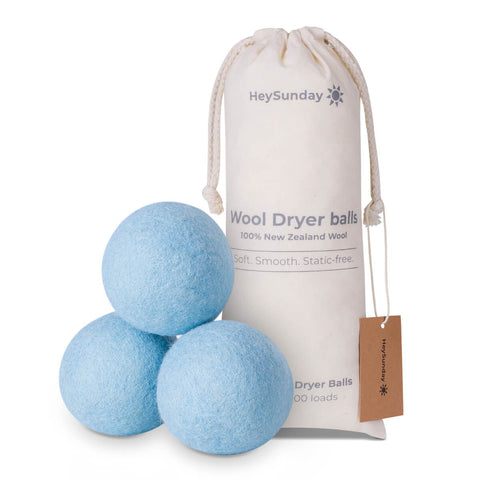
- Swap scented softener and dryer sheets for fragrance-free dryer sheets or wool dryer balls. There are plenty of non-toxic, fragrance-free options around.
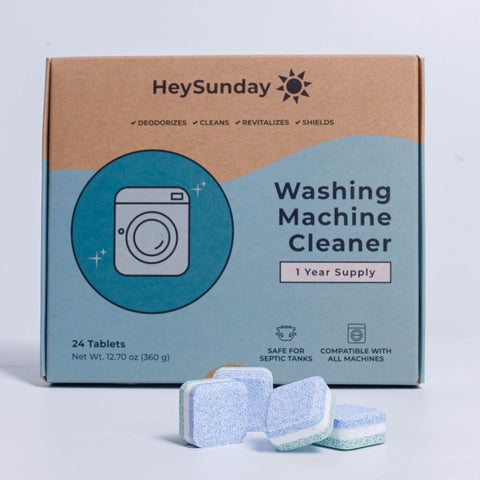
- Keep the washer clean. Old detergent, softener and minerals build up inside the machine and can end up back on your clothes. Run a monthly cleaning cycle with vinegar or baking soda, or put a washing machine cleaner tablet through an empty drum every two weeks.
Hard water adds to the problem. Its minerals bind with detergent and leave a film on fabric. If you live in a hard water area, our guide to the best laundry detergent for hard water covers what helps.
Bonus solution: a plastic-free kitchen upgrade
We also look for ways to cut down on plastic, for the environment and for our own health. In the kitchen we like Caraway Home's microplastic-free kitchen utensils. Our laundry sheets look after your skin, and Caraway's set helps protect you from potential microplastic contamination. The utensils are made with ceramic-coated aluminum and designed to be durable and plastic-free.
Babies, older adults and the rest of the family
Babies and young children have thinner skin that absorbs chemicals more easily. For their clothes and bedding, fragrance-free detergent and an extra rinse are worth the bother. Our guide to washing baby clothes goes through it step by step.
Older adults tend to have drier, more fragile skin that reacts more easily. Soft natural fabrics like cotton and linen, washed in fragrance-free detergent, are usually the most comfortable.
Frequently asked questions
Are laundry sheets good for sensitive skin?
Ours come in a Fragrance Free version and dissolve completely, leaving no residue in the fabric. If a rash is why you're switching, rewash your bedding and towels first. Old detergent can take a few washes to rinse out of thick fabrics.
What laundry detergent do dermatologists recommend for sensitive skin?
A fragrance-free, dye-free one. Many dermatologists point patients to products carrying the National Eczema Association Seal of Acceptance, which means the formula has been checked against the NEA's list of known irritants.
What is the worst laundry detergent for sensitive skin?
A heavily scented detergent with added dyes is usually the worst. Scent beads and in-wash boosters are often worse than the detergent itself. They're designed to leave fragrance in the fabric for weeks.
Can laundry detergent cause eczema?
No, but it can trigger a flare-up. Once you switch to a fragrance-free detergent, an irritant rash usually settles within days to a couple of weeks. An allergic rash can take two to four weeks to clear, so give the new detergent that long before you decide it hasn't worked.
Is hypoallergenic laundry detergent regulated?
It isn't regulated in the US. The FDA tried to define "hypoallergenic" for cosmetics in 1975, a court threw the definition out in 1977, and there's no federal standard for detergents either. On its own the word tells you very little.
What dryer sheets are best for sensitive skin?
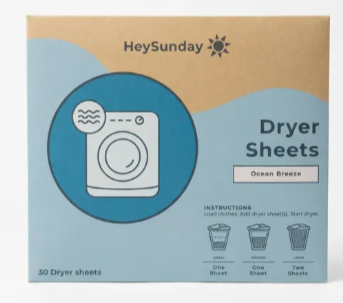
Fragrance-free ones. The softening agents in dryer sheets coat the fabric and make towels less absorbent, so leave them out for towels and underwear even if you use them on the rest of the load. Our dryer sheets come in a Fragrance Free version.
What is the best material for bed sheets for sensitive skin?
Go for natural fibers. 100% cotton, bamboo and linen are typically best for sensitive skin.
Can sensitive-skin detergent still tackle tough stains?
Sensitive-skin detergent can handle tough stains, especially if you pretreat them. Many plant-based detergents clean surprisingly well without the harsh additives.
Is eco-friendly always better for sensitive skin?
Often, since eco-friendly brands tend to skip dyes and fragrances. Check the formula anyway.