
You're standing in the laundry aisle, and every box screams "natural laundry detergent," "plant-based," or "eco-friendly."
Here's the thing: there's no federal definition of "natural" for plant-based detergent. None. And that's exactly why you need to know what to look for.
Martin Wolfe, MA in Chemistry and Director of Wolf Sustainability, helped us answer this question:
"Actually, nothing makes a laundry detergent 'natural.' Many companies have had to settle lawsuits for tens of thousands of dollars for claiming their products were 'natural'.
The term "natural" gets thrown around like confetti in the cleaning aisle, but without clear rules, it's easy for brands to make claims that don't hold up. The good news? You can learn what actually matters, which ingredients genuinely make a difference, and how to spot the difference between honest products and greenwashing.
Let's break it down.
Why isn't "natural" legally defined?
Imagine if anyone could call their product "natural" without any real definition or oversight. That's basically where we we are with laundry detergents. Law suits has mostly brought a halt to the practice.
There is no federal FTC definition of 'natural' for laundry detergent. The FTC Green Guides (16 CFR Part 260), last revised in 2012, explicitly declined to define what 'natural,' 'sustainable,' or 'organic' actually mean. (Source: FTC Green Guides, https://www.ftc.gov/news-events/topics/truth-advertising/green-guides)
The reasoning wasn't laziness. Is an enzyme produced by fermenting a microorganism more natural than a molecule synthesized from coconut oil in a reactor? Both start with living material. Both involve industrial processing. Any definition strict enough to be meaningful would exclude products most people would call natural, and any definition loose enough to include them wouldn't filter anything.

"Organic" deserves the extra line. On food it's one of the most tightly regulated words in American retail. On a detergent bottle it's usually decorative — the same three letters, an entirely different amount of enforcement behind them.
Why does that matter?
Because brands can technically label almost anything as "natural" but most brands have stopped this practice because of class action lawsuits. The FTC has been promising to update these guidelines for years—updates were expected in 2023, then 2024, then 2025, and as of late 2025 they're still pending.
The result?
More than 45% of new laundry detergent launches in 2023-2024 were labeled 'green,' 'plant-based,' or 'sustainable,' according to market research.
According to Market Reports World on Eco-Friendly Laundry Detergents Market Size, Share, Growth, and Industry Analysis 2026, the U.S. eco-friendly laundry detergent market stands as a mature leader in sustainable home care. Market penetration is robust: about 64% of households purchase environmentally conscious cleaning items at least once a year, while nearly 37% rely on green laundry detergents regularly.
This is why reading beyond the buzzwords is essential. The label is only half the story.
What Ingredients Actually Make a Detergent 'Plant-based'?
When brands talk about "plant-based laundry detergent," they're usually referring to specific ingredients: surfactants, enzymes, and other cleaning agents derived from plants rather than fossil fuels.
Martin Wolfe, MA in Chemistry and Director of Wolf Sustainability:
"Plant-based laundry detergents may use surfactants, enzymes, and builders derived from plant and mineral sources rather than synthetic petrochemicals, without artificial fragrances, dyes, or harmful preservatives. Such products prioritizes biodegradability, skin safety, and environmental responsibility while effectively cleaning your clothes."
Here's what to look for:
Surfactants
Surfactants do the actual cleaning. They're the molecules that grab onto dirt and oil so water can wash them away. The question is where they come from.
Conventional detergents typically use surfactants made from petroleum. Natural detergents swap those out for plant-derived alternatives — things like coconut oil, corn starch, or vegetable oils. You might see ingredients like coco-betaines, alkyl polyglycosides (APG), or saponified coconut oil on the label. If the name sounds like a plant, that's generally a good sign.

Why does this matter?
About 60% of the 15 million tonnes of surfactants produced globally each year end up in waterways. Plant-based surfactants break down faster and do less damage to aquatic ecosystems. One peer-reviewed study found that switching just one tonne of conventional surfactant to a plant-based alternative cuts CO₂ emissions by 1.5 tonnes(!).
Enzymes
Enzymes are the stain specialists. Proteases handle protein stains (blood, sweat), lipases tackle grease, and amylases break down starches (food, grass). The best plant-based formulas use all three. One nice bonus: enzymes work well at lower temperatures, so they're a natural fit for cold-water washing.
Builders
Builders soften your water so the surfactants can do their job. Natural options include sodium citrate and sodium carbonate. Conventional detergents often use EDTA or phosphates, which stick around in waterways longer than you'd want.
What About the Ingredient List?
A good rule of thumb: if you can't recognize at least 70% of what's on the label, keep looking. A truly natural detergent has a short, readable ingredient list — not one that reads like a chemistry final. For more on what to avoid, check out our guide on non-toxic laundry detergent benefits.
One thing to watch: "plant-based" usually means most of the active ingredients come from plants. But "most" isn't "all" — and no law requires brands to be specific about that ratio.
Red-Flag Ingredients to Avoid
Not all ingredients are created equal. Here's what to watch out for:
Phosphates and EDTA
These water-softening agents can contribute to nutrient pollution in waterways. They're less common in U.S. detergents than they used to be, but they still show up. Look for "EDTA-free" on labels.
Parabens
Parabens — methylparaben, propylparaben, butylparaben, ethylparaben — are preservatives that stop bacteria and mould growing in water-based products. That's the key to where they show up: liquid detergent is mostly water and needs preserving. Dry formats need far less.
The concern is that parabens have weak estrogenic activity, and the longer-chain ones more so. Regulators have landed in different places on it. The EU caps individual parabens at 0.4% and mixtures at 0.8%, restricts propyl- and butylparaben to 0.14% combined, and has banned five parabens outright. The FDA has no preservative-specific rules and says it currently has no information showing parabens as used in cosmetics affect human health.
So the more useful question isn't whether a product contains parabens — it's what replaced them. When brands dropped parabens, many switched to isothiazolinones, particularly methylisothiazolinone (MI). MI is used in liquid laundry products, and it was named ACDS Allergen of the Year in 2013 after triggering a documented contact-allergy epidemic that led the EU to ban it from leave-on cosmetics.
Scan the ingredient list for the preservative, whatever it is. Dr. Smith, Medical Director, Agape TC recommends:
My very first suggestion would be to eliminate all fragrances in the laundry process: detergent, fabric softeners, dryer sheets and scented beads. The reason is that the majority of individuals with sensitive skin have their skin exposed to the laundry products for an extended period of time due to the fact that most clothing and bedding remains in constant contact with the body. Therefore, minimizing all fragrance exposure possible by removing any non-essential fragrances is a logical initial action.
If you react to detergents, see our guide to laundry detergent allergies.
Synthetic Fragrances and Dyes
The term "fragrance" on a label can hide dozens of chemical ingredients—some of which may trigger allergies or sensitivities. For a truly minimal product, look for fragrance-free laundry detergent options or products that list specific essential oils.
Triclosan and Antimicrobial Agents
These don't belong in laundry detergent and have been banned in many personal care products. Check that your detergent doesn't sneak them in. Understanding whether laundry detergent is toxic helps you make informed choices about your family's health.
Optical Brighteners
Also known as fluorescent whitening agents, these don't clean—they make clothes look whiter by reflecting light. They don't break down easily and can accumulate in water systems. This is where understanding the difference between "clean" and "cosmetically enhanced" matters.
Greenwashing often relies on vague language and partial truths. If something sounds too good to be true, compare it to the ingredient list. More on spotting greenwashing in our dedicated guide about what is greenwashing.
Preservatives
Parabens are preservatives with mixed safety data. Isothiazolinones are preservatives that may cause an allergic reaction. If you are sensitive to allergens, avoid these preservatives.
Certifications That Actually Mean Something

If the ingredient list is the "what," certifications are the "proof."
Not all certifications are equally rigorous. Here's which ones carry real weight:
EPA Safer Choice
The Environmental Protection Agency reviews the product's ingredients and manufacturing process. This is one of the strictest certifications for cleaning products. If a detergent has this label, the ingredients have been vetted for genuinely non-toxic properties non-toxic properties and biodegradability.
The EPA's review goes beyond just listing ingredients—it evaluates aquatic toxicity, human health concerns, and biodegradability. Products earning this label must meet EPA standards across all these metrics, which is why EPA Safer Choice certification is considered the gold standard for laundry detergent safety.
Green Seal
Third-party certification that evaluates ingredients, manufacturing, and packaging. Green Seal standards are strict—products must meet specific performance benchmarks while minimizing environmental impact. This certification verifies that detergents reduce the environmental and health impacts throughout their life cycle.
Green Seal certification requires that formulations perform effectively in consumer-relevant wash conditions (matching real-world laundry challenges), which distinguishes it from certifications that only evaluate ingredient sourcing. The organization also assesses packaging materials and manufacturing waste, making it a comprehensive environmental certification.
USDA Biobased
Certifies that a product contains a certain percentage of ingredients derived from renewable resources. Look for the percentage—it matters. 90% biobased is very different from 20% biobased.
The USDA label typically shows the biobased content percentage on the product, and products with higher percentages generally have lower environmental footprints since they rely less on fossil fuel-derived ingredients.
USDA Biobased certification also verifies through third-party testing that the percentage claims are accurate, preventing brands from inflating their natural credentials.
Rainforest Alliance and Fair Trade
These don't specifically certify "plant-based" but they ensure ingredients are sourced responsibly. This is especially important for products using palm oil or other commodity ingredients. Learning more about green cleaning products helps you identify brands with genuine sustainability practices.
California State Law
California Business & Professions Code § 17580.5 makes it unlawful to make false environmental marketing claims, incorporating FTC Green Guides into state law. (Source: California BPC / Provenance.org, https://www.provenance.org/news-insights/what-are-the-ftc-green-guides-and-what-do-they-mean-for-brands) This means brands operating in California face real consequences for greenwashing.
Certifications aren't perfect, but they represent accountability. A product with multiple third-party certifications has jumped through more hoops than one with just marketing claims.
State-Level Enforcement: Why It Matters
Here's the reality: federal standards for "natural" laundry detergent are still pending (and have been for years). But states are filling the gap.
California's strict environmental marketing laws set a precedent that other states are beginning to follow. When a brand makes an environmental claim—"100% biodegradable," "eco-friendly," "non-toxic"—it can face legal action if those claims are false. This creates real incentive for honesty.
Think of state-level enforcement as a temporary guardrail while we wait for federal updates. It's not perfect, but it's something. And if you're buying from a brand that operates nationally, odds are they're already held to California standards whether you live there or not.
How to Read a Laundry Detergent Label
Now let's put this into practice.
Start With the Ingredient List
It should be readable. If you don't recognize at least 70% of the ingredients, ask yourself why. A product that lists "surfactants (coconut-derived)," "enzymes," and "essential oils" is giving you transparency. One that just says "proprietary cleaning blend" is not.
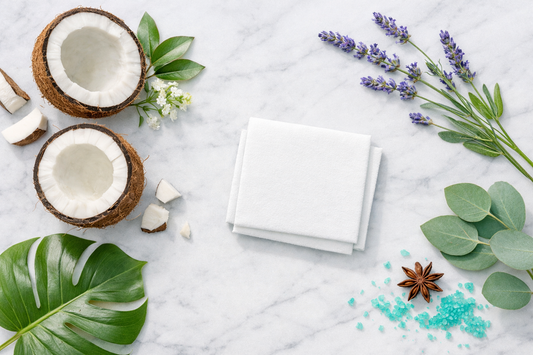
For example, HeySunday publishes the full ingredient list for every product. Here's what's in our laundry sheets:
Fragrance Free
Sodium Dodecyl Sulphate, Polyvinyl Alcohol, Starch (Corn), Deionized Water, Cocamidopropyl Betanine, Lauramidopropylamine Oxide, Sodium Fatty Acids, Glucoside Polyoxyethylene Ether, Natural Saponin, Sunflower Oil, Tea Oil, Protease, Citric Acid, Glycerin.
Ocean Breeze
Sodium Dodecyl Sulphate, Polyvinyl Alcohol, Starch (Corn), Deionized Water, Cocamidopropyl Betanine, Lauramidopropylamine Oxide, Sodium Fatty Acids, Glucoside Polyoxyethylene Ether, Natural Saponin, Sunflower Oil, Tea Oil, Protease, Citric Acid, Glycerin, Fragrance.
Short list, recognizable ingredients, no "proprietary blend" — that's what ingredient transparency looks like.
Look for Certifications
EPA Safer Choice, Green Seal, and USDA Biobased labels indicate third-party accountability. These aren't perfect, but they mean someone vetted the product and verified it meets rigorous standards for a truly natural formula.
Check for Specific Plant-Based Claims
"Plant-based surfactants" is more meaningful than "natural." "No synthetic fragrances" is clearer than "freshly scented."
Performance Claims vs. Environmental Claims
A detergent can claim to get your clothes clean (performance) without being "eco-friendly." These are separate conversations. A truly environmental laundry detergent should do both—clean well AND minimize environmental impact.
Consider Your Water
If you have hard water, you'll want builders in your detergent. If you're on a septic system, you want biodegradable options. Your circumstances shape what environmental actually means for your home. Learn more about septic-safe laundry detergent.
Be Skeptical of Excessive Marketing
If the front of the box takes up three times more space than the ingredient list, that's a sign the brand is banking on vibes rather than substance.
Many eco-friendly detergents come in concentrated forms—laundry sheets, for instance, eliminate water weight and packaging bloat. They're easier to store, require less shipping (lower carbon footprint), and you can see exactly what you're getting. When evaluating plant-derived cleaning products, concentrate-based options are worth your attention, especially for cold water laundry where they dissolve easily.
Natural vs. organic vs. plant-based vs. non-toxic: what each term guarantees
The rule underneath this whole table: claims about what a product contains can be checked. Claims about what it is cannot. Certifications sit in between — they're claims someone else has already verified.

Frequently Asked Questions
Is “environmental” laundry detergent actually better?
Not necessarily—it depends on what matters to you. A truly natural laundry detergent can be gentler on skin, better for aquatic ecosystems, and made without harsh chemicals. But conventional detergents can also clean effectively. The key is making a choice based on facts, not buzzwords.
Does an “environmental” detergent clean as well as conventional?
Yes, if it's formulated properly. Plant-based surfactants and enzymes are just as effective as synthetic ones when used correctly. The difference is environmental impact and skin sensitivity, not cleaning power.
What's the difference between "natural laundry soap" and "plant-based detergent"?
Natural laundry soap is technically made through saponification (combining fats with lye), while natural laundry detergent is synthesized from plant-based materials. Soaps can claim to be natural because they are made from only vegetable oils and lye. Both soaps and detergents can be gentle and eco-friendly, but they differ in how they're made. Some prefer natural laundry soap for its simplicity and minimal ingredient lists.
Why isn't "natural" legally defined?
Because it's genuinely complicated. What counts as natural? Is a synthetic enzyme derived from microorganisms more natural than a chemical synthesized in a lab? The FTC decided the category was too murky to define—which inadvertently left the door open for greenwashing. Expect updated guidance eventually, but don't hold your breath.
What's the difference between "natural" and "plant-based"?
"Plant-based" refers to ingredients sourced from plants rather than petroleum. "Natural" is vaguer and unregulated. A detergent can be plant-based but use harsh processing chemicals. The best products are transparent about what they contain so consumers can make an informed choice.
The Bottom Line
There's no perfect "laundry detergent"—there's only the one that's right for your values, your skin, and your home. The fact that "natural" has no federal definition means you have to do the work of reading labels and checking certifications.
But here's the upside: you're equipped now. You know what surfactants matter. You know which certifications to trust. You know that state-level enforcement exists and is tightening. Most importantly, you know that buzzwords aren't proof.
When you find a detergent that's transparent about its ingredients, backed by real certifications, and uses plant-based cleaning agents—that's when "these products" actually mean something.