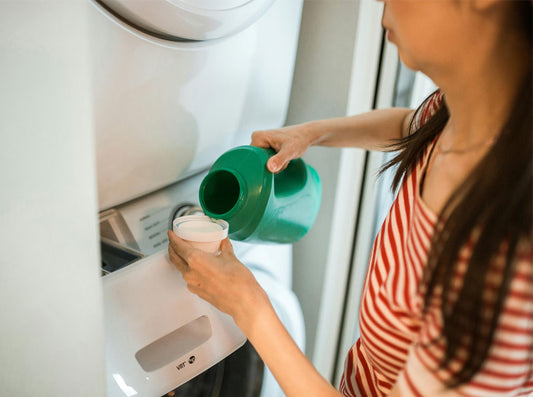
For a medium load, use the medium-load amount on your detergent pack: usually the first line on a liquid cap, about 1.5 fl oz (3 tablespoons) on a typical bottle, or 1 pod, or 2 HeySunday laundry sheets. Use a little less for small loads and soft water, and more for large, very dirty loads or hard water.
A few years ago I didn't sort and I didn't measure. Then I pulled a load out of the machine that felt grimier than when it went in. Using too much detergent turns out to be one of the most common laundry mistakes, and I was guilty of it for years. The extra doesn't rinse out, so it stays in the fabric and in the machine.
How much detergent per load

Every detergent is a different strength, so check the pack first. The usual guidance looks like this.
| Detergent | Medium load | Large or heavily soiled load | Where it goes |
|---|---|---|---|
| Liquid | The medium line on the cap (often line 1), about 1.5 fl oz on a typical bottle | The large-load line on the cap (often line 3) | The dispenser drawer, or the drum if your washer has no drawer |
| Powder | The medium line on the scoop | The large-load line on the scoop | The powder drawer, or the drum before the clothes |
| Pods | 1 pod | 2 pods | The back of the empty drum, before the clothes |
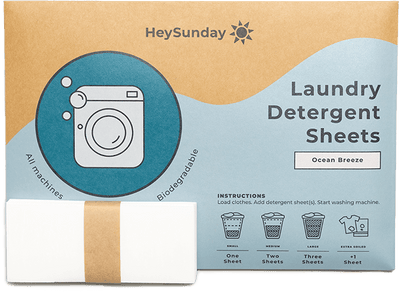
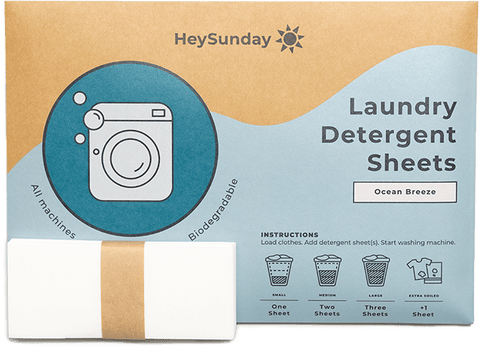
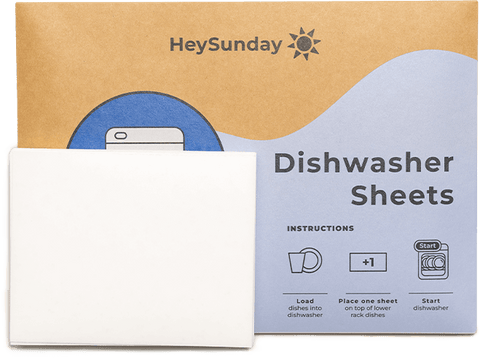
| HeySunday laundry sheets | 2 sheets (1 for a small load) | 3 sheets | In the drum, on top of the clothes |
To find the dose in ounces for any liquid, divide the bottle size by the number of loads on the label. A 146 fl oz bottle sold as 100 loads works out at about 1.5 fl oz a load, and an 84 fl oz bottle sold as 59 loads comes to about 1.4 fl oz. That's the brand's medium load.
Plenty of people get away with less. Some guides put a standard medium load at just 2 tablespoons of liquid detergent (1 fl oz). Most washers don't use enough water and spin cycles to get rid of the excess. If your clothes come out clean at the bottle's dose, try a little less for a few weeks and see if you notice.
Too much detergent is also money down the drain. Trust me, you really don't need that much to get a good clean. Measure it every time and stop pouring by eye.
Load size goes by how full the drum is. A small load fills about a quarter of the drum, a medium load about three quarters, and a large load fills it close to the top.
How much detergent in an HE washer
HE (high efficiency) washers use much less water than older top-loaders with an agitator, so the same amount of detergent makes more suds and has less water to rinse out with. Use a detergent marked HE and stick to the line on the cap for your load size, without rounding up. HeySunday sheets are low-sudsing, which is what an HE machine wants.
Front-loaders
Pour liquid into the main wash compartment of the drawer, and never above the MAX line marked inside it. If you see a lot of foam through the door window, cut back next time. Our guide on where detergent goes in a washer shows each compartment.
Top-loaders
An HE top-loader takes the same dose as a front-loader. An older top-loader with a center agitator fills with more water, so you can use the full line for the load size on the pack. Pour the detergent in as the drum fills, before the clothes go in. It mixes more evenly that way. If you're choosing a new machine, we compare front-load and top-load washers.
Signs you're using too much detergent

- Suds are still in the drum at the end of the cycle.
- Clothes feel stiff, sticky or a bit greasy once they're dry.
- Dark clothes have pale streaks or blotches on them. Our guide to getting detergent stains out of clothes shows how to fix them.
- The washer smells musty, especially around the door seal or in the drawer.
- Loads come out wet, because extra foam can make the washer slow down or skip the spin. There's more on that in our guide to spin cycles.
Residue left in clothes can also irritate skin, which matters more if you have children or sensitive skin (or children with sensitive skin). It builds up inside the washer as well. Each time the machine flushes out dirty water and leftover detergent, some of it sticks in the mechanics, and over time that can lead to breakdowns.
If you spot any of these, cut back for the next few loads and run an empty hot cycle to clear the build-up. A washing machine cleaner tablet in that empty cycle helps, and our guide on how to clean a washing machine goes through it step by step. Vinegar or baking soda are good for stubborn smells and residue in the drum and on clothes.
When to use more or less
Hard water needs a little more. The minerals tie up some of the detergent. Our guide to the best laundry detergent for hard water covers what else helps. Soft water makes more suds, so use a little less.
Small loads take less than the medium line. Heavily soiled clothes get the large-load amount, but treat stains before the wash. Extra detergent won't shift a set-in stain. Delicates and wool need a small amount of a detergent made for them.
Sorting helps the dose work. It's easy to skip, I get it, but splitting clothes by fabric, color and how dirty they are means each load gets the right amount and comes out properly clean. Watch the temperature of your wash too. Delicates and synthetics usually want a cold wash, and cotton can often go warm.
Detergent myths
More detergent means cleaner clothes
Past the right dose, the extra sits in the fabric and the machine, and clothes come out dirtier.
Suds mean it's working
Suds come from foaming agents, and how much foam you see says little about how well a detergent cleans. HE washers are built for low-sudsing detergent. When the cycle ends you want a basin with no suds left in it.
You always need fabric softener
I was surprised to learn you don't. A good concentrated detergent cleans and freshens on its own. Softener coats fibers, which makes towels less absorbent and can trap smells in activewear, and with regular use the build-up can break down fibers in delicate fabrics like wool. Wool dryer balls do a similar job in the dryer.
Why I switched to sheets

I was not ready for the amount of time that would disappear from my day when I had kids. I couldn't get anything done around the house, laundry included. Detergent sheets made that one chore a bit easier. The detergent is pre-portioned, and I can load the washer and add it while holding a little one on my hip.
I don't read a cap any more. With HeySunday laundry sheets it's 1 for a small load, 2 for a medium load, 3 for a large one, and 1 extra sheet if the load is heavily soiled, and I love not measuring, not spilling from a heavy jug and not guessing whether I've over or under done it. A sheet costs 25¢ on subscription, so a medium load is 50¢ every time, however tired I am. It's my favorite detergent for its strong, enzyme-based cleaning. Our guide on how to use laundry detergent sheets has more.
Frequently asked questions
How much laundry detergent should I use?
Whatever your detergent's label says for the load size. If you're not sure, start low. A load with slightly too little detergent can look a bit dull, and you'll notice and fix it next wash. Too much builds up quietly in clothes and the machine.
How much detergent should I use in an HE washer?
The cap line for your load size, with an HE detergent. Regular detergent in an HE machine makes so much foam that some front-loaders show a suds error code and pause the cycle to let it settle.
How much liquid detergent should I use in a front loader?
Fill the cap to the medium line for a medium load. If your front loader has an auto-dose tank, it measures for you, and most let you pick a lower setting if you have soft water or see foam.
How many ounces of laundry detergent per load?
About 1.3 to 1.6 fl oz for most liquids. One fl oz is 2 tablespoons, and 3 tablespoons from a kitchen measuring spoon covers most medium loads if you've lost the cap.
How many laundry detergent sheets should I use per load?
1 for small, 2 for medium, 3 for large, plus 1 extra sheet if the load is heavily soiled. Sheets tear cleanly, so for hand washing in a sink, a quarter to half a sheet is plenty.